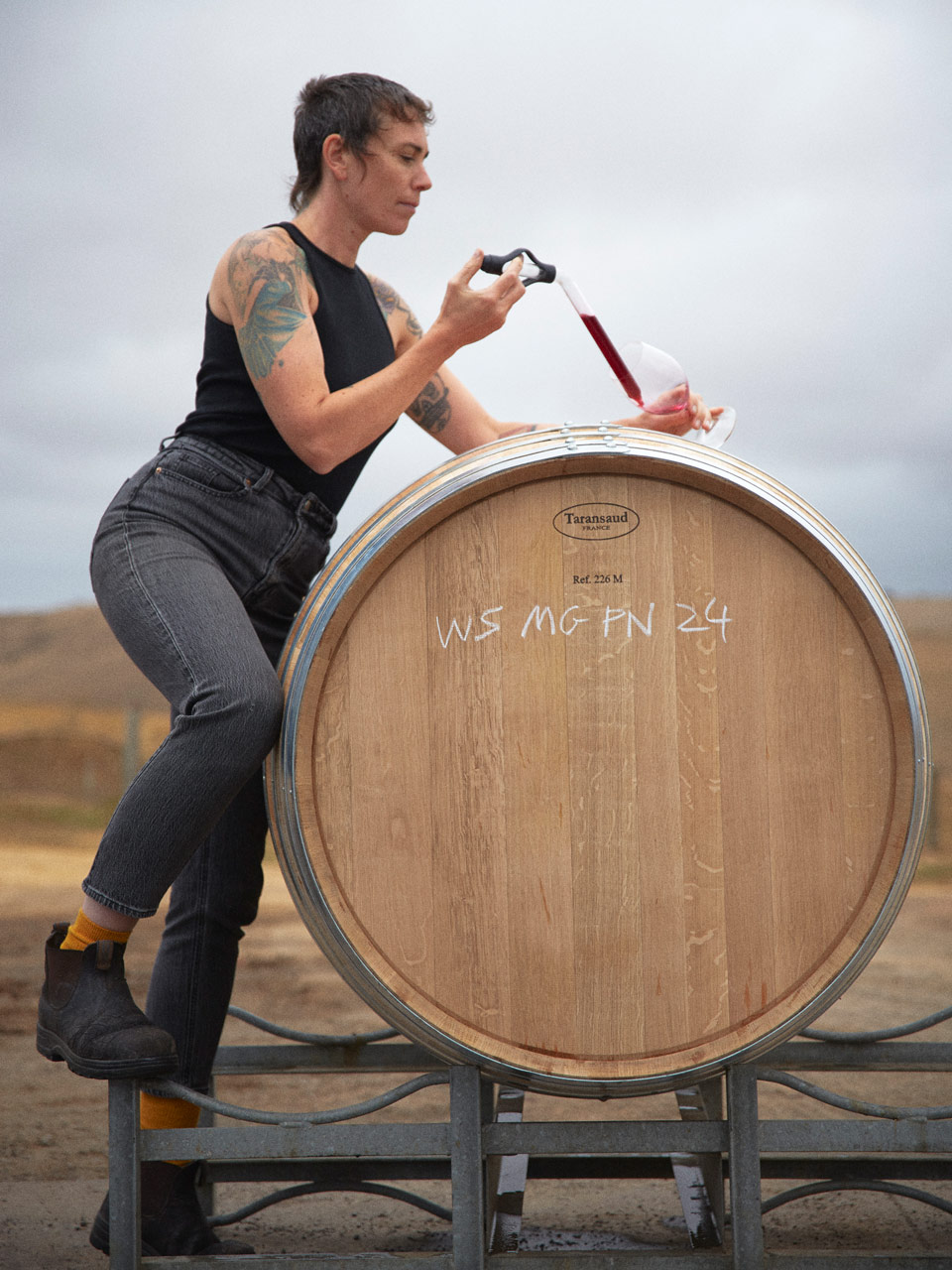
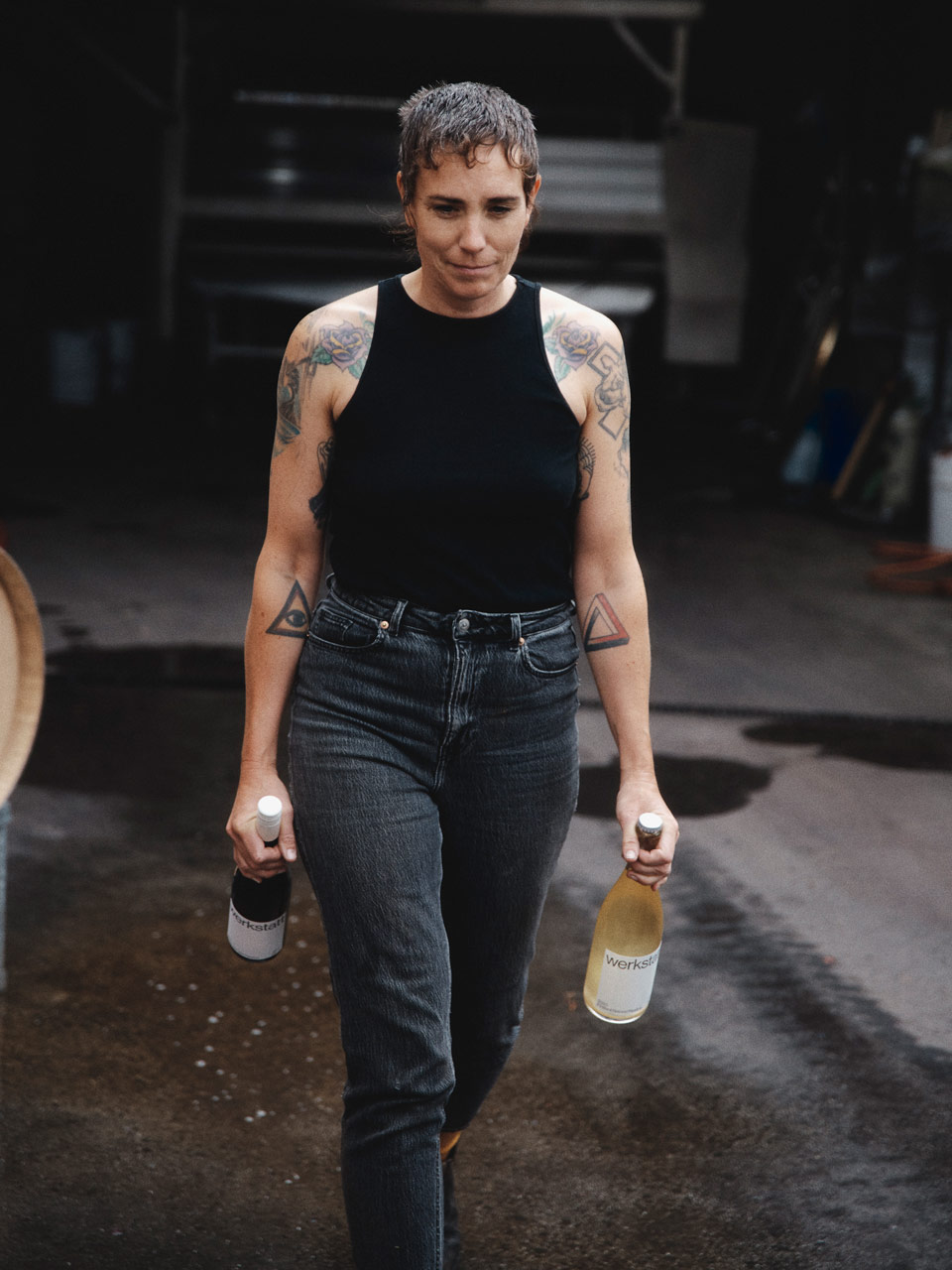
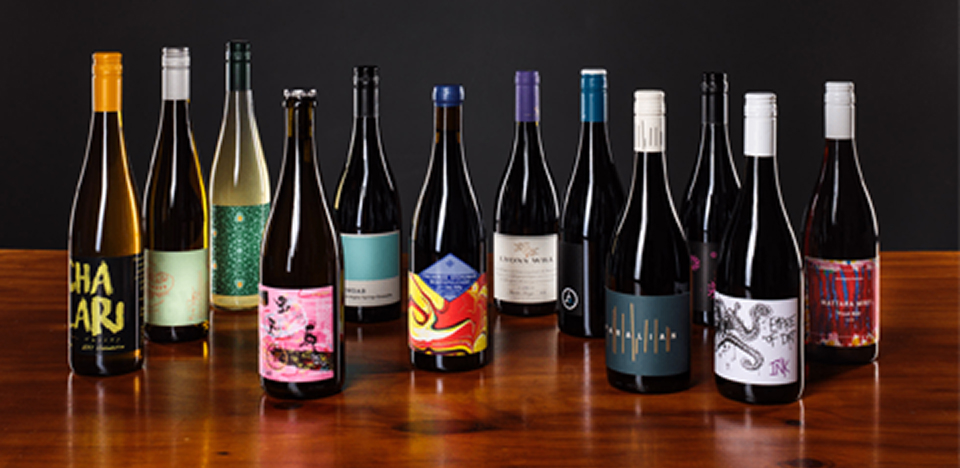
Bridget Mac, the creative force behind Werkstatt Wine, embodies the spirit of an artist-turned-winemaker, melding her passion for German, Austrian, and Swiss wines and varieties with the distinct terroirs of Australia. Her label debuted in 2022, with releases thus far including riesling (in still, pét-nat, and traditional method sparkling forms) and pinot noir, with wines based on gewürztraminer and weissburgunder (better known as pinot blanc) in the wings.
“My concept for the brand is to produce fine wines with Australian fruit, which are reflective of their terroir but exhibit an expression of regions like Germany and Alsace. My vision is to keep expanding my offering to include more varietals. I’m wanting to push boundaries with this brand and shift the preconceptions that some consumers have towards these varietals and styles,” says Bridget Mac. “Choosing specific vineyards, climates and varietals allows for these expressions, rather than a heavy hand in the winery.”
Launching her winemaking journey with a vintage at Lethbridge Wines in 2019, Mac has since honed her craft across various esteemed wineries, including Sutton Grange Winery and Chatto Wines, enriching her expertise and philosophy with each vintage. Her academic pursuits in wine science at Charles Sturt University further underscore her dedication to understanding the intricacies of winemaking.
Mac’s transition from an artist to a winemaker reveals a natural progression of her creative journey. She elucidates, “I’m an artist and a maker originally, so making things has always been something I have had the urge to do.” This innate drive to create, to manifest her vision into tangible forms, propelled her towards establishing her own label, where she could imbue her wine with the same passion and creativity that she poured into her art.
The decision to launch Werkstatt Wine was not made on a whim but was the culmination of experiences and a growing sense of direction in her winemaking journey. “The pivotal point to starting my own wine label was in 2021 after an incredibly inspiring year working at Sutton Grange under the direction of Melanie Chester and a short but enriching vintage in Tasmania with Jim Chatto of Chatto Wines,” Mac recounts. This period was a time of learning, growth, and affirmation for her, reinforcing her resolve to chart her own course in the wine industry.
“I’d always loved German Rieslings, and was thinking there was a lack of good offerings of this style in Australia.”
Her commitment to crafting a unique offering in the Australian wine landscape was further crystallized by her love for German Rieslings and the opportunity she saw to introduce this style to Australian palates. “I’d always loved German Rieslings, and was thinking there was a lack of good offerings of this style in Australia,” Mac reflects. Her journey took a significant turn when she approached Ray Nadeson of Lethbridge Wines, who offered her the support she needed to take the leap and produce her first vintage. “One day in November 2021 I made a phone call to Ray Nadeson of Lethbridge Wines, explained my idea for my brand and he was just as enthusiastic and offered me a space at Lethbridge to make my first cuvée,” she says. “In 2022 I made the inaugural Werkstatt Delatite Riesling. I only made 2000 litres, fermented to dry with a 10% component of skin contact for additional phenolics. After the success of this wine I knew I was onto something – and damn, it made me very happy – and the rest, as they say, is history.”
Werkstatt Wine – named after the artistically influential Wiener Werkstätte of the early twentieth century – is a celebration of Mac’s deep appreciation for the grape varieties and wine styles of Germany and its Central European neighbours. Translating this passion into the Australian landscape, she meticulously selects vineyards that mirror the terroir’s essence, essential to crafting her Germanic-style rieslings.
“My rieslings are very Germanic in style,” Mac explains, emphasizing the importance of site selection over winery intervention. “I choose particular sites because of the soil and climate. This helps impart minerality, complexity, and phenolics in the wines.”
“Making wine in Germany and selling it in Australia is also up there on the top of the list as something I would love to do in five to ten years’ time.”
Mac passionately points out that her mission is to offer a unique perspective on riesling in Australia, an ambition shared by a select group of producers. “It is important for me and the ethos of Werkstatt to not just make ‘another Australian riesling’ in an already-saturated market,” she asserts, acknowledging her admiration for peers like Crawford River Wines, Vignerons Schmölzer and Brown in Victoria, and Utzinger Wines in Tasmania.
Mac’s journey led her to Mount Gambier, a region she believes is under appreciated yet brimming with potential. “I’ve been sourcing my grapes from Mount Gambier for the last two years and to be honest before I had the opportunity to get fruit from there, the region wasn’t even on my radar – I had to look it up on the internet. I don’t think the region is on many people’s radars, which is a shame because it has huge potential in many ways,” she says.
Mac highlights the region’s unique geology and climate, which she credits for the distinctive characteristics of her wine: “The soils are extremely unique,” she says. “You have this limestone which was deposited from marine invertebrates in the Miocene epoch (some 23 to 5.3 million years ago) as the region used to be a sea. Then in the recent history of the area (some say up until 4000 years ago) there was significant volcanic activity. Volcanoes, being extremely hot and exerting immense pressure on the environment, metamorphosed the limestone into loose chunks of marble. Having the vines grow through this marble I believe imparts a beautiful concentrated minerality to the wine. The climate is also perfect for riesling, and for pinot noir … It has a maritime influence which keeps the days fresher and cooler and the nights are always cool. This means the fruit ripening season is long and slow – I’m usually harvesting riesling in late March, early April. This long ripening allows for retention of acid and aromas in the berries. For these reasons and more I think Mount Gambier is a really exciting region, and should be celebrated more.”
Looking ahead, Mac envisions a future where she deepens her connection with the land and viticulture. She shares her aspirations for the coming decade, underlining a commitment to sustainability and quality: “In five or ten years’ time I’m aiming to be planting or have planted a vineyard, either in Victoria or Tasmania,” she outlines. Her ambitions extend beyond vineyard ownership to experimenting with a range of grape varieties. “There are certainly grape varieties I would love to work with – ones which as a négociant are hard to get your hands on,” she notes, expressing a desire to explore less conventional grapes that resonate with her winemaking philosophy. As of vintage 2025, she has taken on parcels of gewürztraminer and weissburgunder (better known by its French name, pinot blanc), the latter of which is destined to become a traditional-method sparkling inspired by high-quality German Sekt wines. Appropriately enough, Mac harbors aspirations that bridge continents, aiming to intertwine her Australian winemaking experience with her German inspirations. “Making wine in Germany and selling it in Australia is also up there on the top of the list as something I would love to do in five to ten years’ time,” she reveals, indicating her intent to further blending the essence of both worlds in her craft.
In the meantime, she credits her Best New Act win at the 2024 Young Gun of Wines Award as, in her words, “a great boost, with the validation and encouragement it brought personally, not to mention the industry recognition my business and I have enjoyed.” She adds: “I can shout from the rooftops how much these awards help young winemakers.” Recent acknowledgements from industry figures such as Max Allen – who listed Werkstatt’s 2024 Mount Gambier Riesling as one of his top twenty drinks of the year – have only made her enthusiasm for Werkstatt more keen. And she’s giving back to the wine community, too, having recently joined wine industry advocacy group Femier Cru in a committee role. “Femier Cru is a new organisation that supports Femme/LGBTQIA+ people in winemaking and hospitality by inspiring, and offering a support network, in these industries which have been historically male-dominated,” she says. “With recent revelations in the hospitality industry, support organisations like this are crucial – watch this space.”
GET FIRST ACCESS TO THE NEXT WINE ICONS – DELIVERED