2021 Dal Zotto ‘L’Immigrante’ Barbera King Valley

Read more
2021 Dal Zotto ‘L’Immigrante’ Barbera
Light on its feet with gorgeous red fruits and serious winemaking detail. Barbera made with ambition — this is what happens when a vigneron becomes genuinely obsessed with an overlooked grape. This is the Barbera you get the good glassware out for.
  • Producer

    Dal Zotto

  • Region

    King Valley

  • RRP

    $85

  • Vintage

    2021

  • Variety/Varieties

    Barbera

  • Alc./Vol.

    13.7%

Cherries, raspberries and plums up front, with savoury notes of cured meat, cinnamon and autumn leaves running through. The palate is bright and a little tart, all strawberry and fine, silky tannin, finishing long and savoury. Light on its feet, but with real presence.

Barbera is Piedmont’s most planted red grape, yet it’s forever cast as the middle child — overshadowed by nebbiolo, which makes Barolo and Barbaresco, and dismissed alongside dolcetto, whose name literally means “the little sweet one.” Michael Dal Zotto became fascinated with the variety after working vintages in Italy alongside the region’s powerful, patience-demanding Barolos; barbera’s willingness to be drunk young, and its knack for holding onto natural acidity even in warm conditions, made him see real potential for it back home in Victoria’s King Valley — itself a region shaped by generations of Italian immigrant winegrowing families, the Dal Zottos among them.

Dal Zotto makes two barberas, built as genuine opposites: an everyday drop matured for under a year in old oak, and this one, L’Immigrante, hand-selected from lower-yielding vines and fermented with around a third whole-bunch fruit for extra layers and dimension. It spends twelve months in larger-format oak followed by another twelve in smaller barrels, building structure and savoury depth well beyond the entry-level wine. Where the everyday version is a midweek pour, this one is built for the nights that call for truffles.

Tasting note

A seductive perfume of cherry, raspberry and plum meets equally pronounced savoury notes — bresaola, cinnamon, clove, autumn leaves — with a light ruby colour edged in garnet and orange, and a nose that carries a shy berry note under leather and smoke. The palate catches you off guard: bright, tart strawberry fruit arrives first, before savoury elements of miso and dried mushroom take over, trailing into black pepper, dried herbs and a long, parmesan-like finish. It feels light-bodied on first impression, but there’s real frame here — a taut acid line and fine, smooth tannin holding everything together, with a dry finish that has you reaching for the next glass before you’ve quite decided to.

When to drink it

Don’t let the “good glassware” line fool you into thinking this one needs a fancy meal to justify itself. It’s a light expression of red, and it drinks beautifully all on its own — no food required. It’s something that can be contemplated, or not — up to you. That said, if you do want to put something alongside it, its acid and fine tannin will happily handle richer, truffle-tinged dishes too. Or throw it at some pizza! It’s also the wine to pour for the Barolo-loving father-in-law or uncle at the table who has absolutely no idea barbera can get this good — let him figure it out for himself.

Themes of this wine

Barbera

Barbera is Piedmont’s workhorse red, the most widely planted grape in the region despite living permanently in the shadow of nebbiolo’s Barolo and Barbaresco. Its calling card is a rare combination: naturally high acidity that holds up even as sugar ripens, paired with soft, approachable tannins, making it a grape that rewards both easy, youthful drinking and, in the right hands, more serious ageing. Outside Italy it remains uncommon, but its resilience and adaptability are drawing growing interest from producers in warmer climates.

King Valley

Tucked into Victoria’s high country north-east of Melbourne, the King Valley owes much of its wine identity to Italian immigrant families who settled the region from the 1950s onward, bringing Old World varieties with them long before “alternative varieties” became a buzzword in Australian wine. Elevation across the valley varies significantly, from warmer valley floors to cooler, higher sites, giving growers real flexibility in what they plant and where.

Whole-bunch fermentation

Including a portion of whole grape clusters — stems included — in the ferment is a deliberate way of adding complexity beyond straightforward fruit character. Stems contribute their own tannin structure and can lift savoury, spicy and aromatic layers in the finished wine, generally at some cost to overt fruitiness. Used at around a third here, the technique is a key part of what separates this more serious, structured barbera from Dal Zotto’s lighter, everyday version.

Explore Further

2021 Dal Zotto ‘L’Immigrante’ Barbera

GET FIRST ACCESS TO THE NEXT WINE ICONS – DELIVERED

Find out more

Each month, get 3 bottles of our freshest discoveries. We taste thousands to bring you the best.

Join us and support emerging winemakers, sustainable vineyards, and the development of young professionals.

Find out more
“One of the highlights of my drinking year.”
— Max Allen, Wine Writer
“The future of wine in Australia.”
— Broadsheet
“The cutting edge of Australian wine.”
— The Australian
Foreign Friends’ wines are, as the name suggests, a celebration of friendship – not just friendship in general, but more specifically the friendship that blossomed after an Australian pair of sisters, Crystal and Leila Davis, met the French Juliette Menneteau in Beechworth in 2016. The trio’s collaborative label, founded in 2023, draws on each of their strengths: Leila’s as a winemaker (she currently works for Sentiō and Sorrenberg), Crystal’s as a marketer (her day job is in advertising), and Menneteau’s in wine distribution and sales (she currently works as sales and marketing manager for Australian wine importer and distributor World Wine Estates). Crafting a tight range of six wines – three whites made from savagnin, pinot blanc, and chardonnay respectively, plus a rosé from nebbiolo and reds from gamay and barbera – delivered in whip-smart packaging, Foreign Friends presents a vibrant, youthful, and approachable take on contemporary Australian wine. But don’t let the branding fool you – behind the laid-back odes to good times are three driven, ambitious women who are working hard to raise the profile of women in wine.
  • Producer

  • Region

    King Valley Victoria Yarra Valley

  • RRP

    $

  • Vintage

  • Variety/Varieties

  • Alc./Vol.

    %

Foreign Friends’ wines are, as the name suggests, a celebration of friendship – not just friendship in general, but more specifically the friendship that blossomed after an Australian pair of sisters, Crystal and Leila Davis, met the French Juliette Menneteau in Beechworth in 2016. The trio’s collaborative label, founded in 2023, draws on each of their strengths: Leila’s as a winemaker (she currently works for Sentiō and Sorrenberg), Crystal’s as a marketer (her day job is in advertising), and Menneteau’s in wine distribution and sales (she currently works as sales and marketing manager for Australian wine importer and distributor World Wine Estates). Crafting a tight range of six wines – three whites made from savagnin, pinot blanc, and chardonnay respectively, plus a rosé from nebbiolo and reds from gamay and barbera – delivered in whip-smart packaging, Foreign Friends presents a vibrant, youthful, and approachable take on contemporary Australian wine. But don’t let the branding fool you – behind the laid-back odes to good times are three driven, ambitious women who are working hard to raise the profile of women in wine.

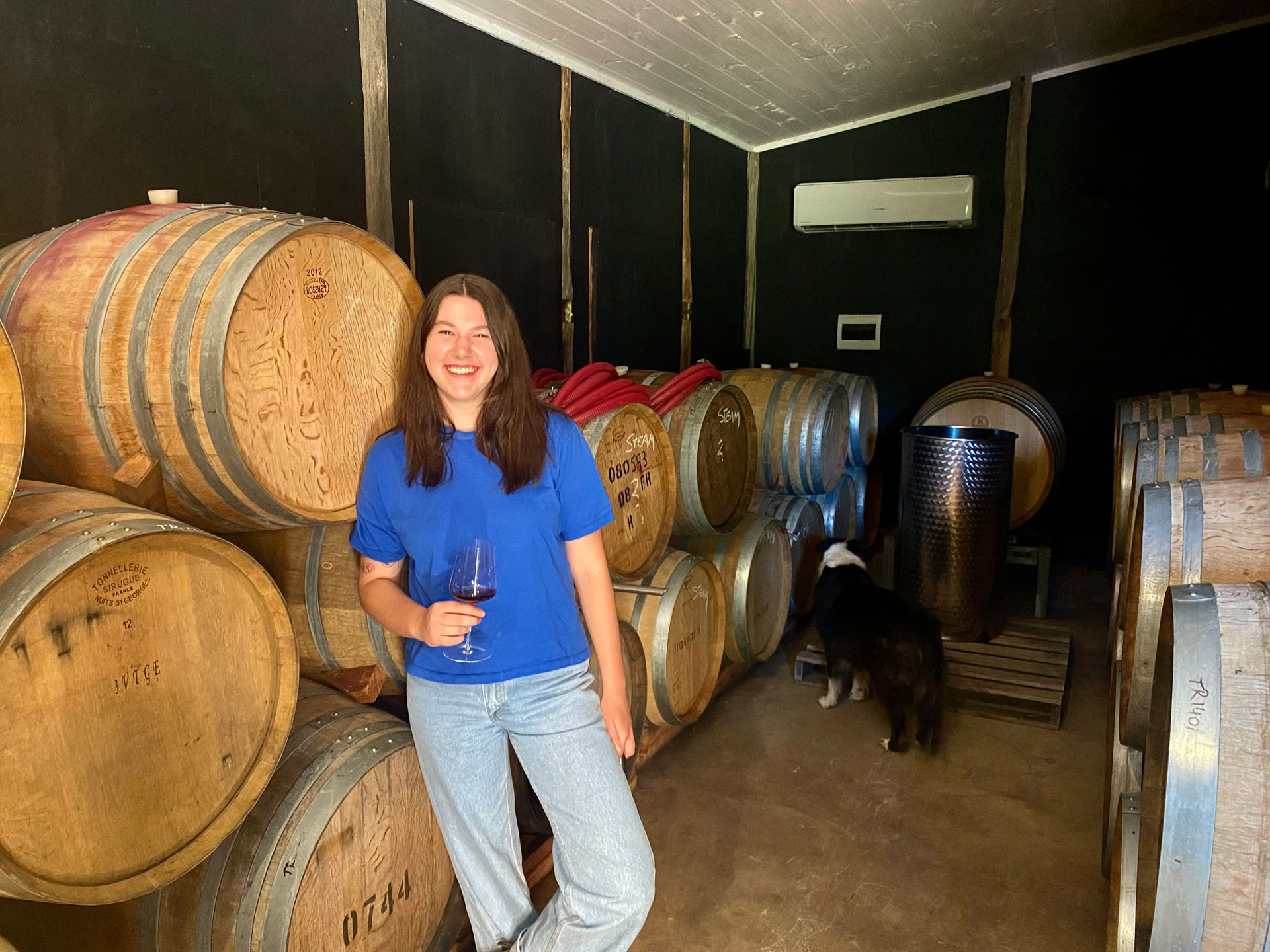
Leila Davis’s formal education is in microbiology – a useful skillset to have in a winery, especially as fermentations are proceeding. She first cut her teeth in the trade by working vintages at Beechworth’s Domenica in 2018 and ’19, before joining Pipers Brook in Tasmania’s Tamar Valley for vintage 2021. Now properly bitten by the wine bug, she going the team at Domenica in 2022, taking time off to rack up vintages with French producers Domaine Mee Godard (Beaujolais) and Domaine Courbet (Jura). Currently working winemaking day jobs between Beechworth icon Sorrenberg and upcomers Sentiō, she joined forces with her sister Crystal and friend Juliette Menneteau to create the Foreign Friends label in 2023.

“What started out as a side passion project quickly snowballed into the business that Foreign Friends has become today,” Leila says. “I had started making a small amount of wine on the side of my job in 2022, but the momentum didn’t really build until I found two other people crazy enough to dive head first into it with me. We’ve kept each other going through the scant funds and the competition amongst all the other new business learning curves. It’s been a very busy few years!”

While Leila’s wine is at the core of Foreign Friends as a business, the label also operates as something of an ode to powerhouse women in history – and, by extension, acts as a form of feminist praxis in the Australian wine industry, which is still regrettably male-dominated. The label’s cuvée names – ‘Virginia’, ‘Ada’, ‘Jeanne’, etc. – may strike casual consumers as whimsical characterisations of the wines, but each is actually named after a historical female trailblazer such as Virginia Woolf, Ada Lovelace, or Jeanne Baret. Each cuvée’s respective trailblazer is depicted on the postage stamp–inspired label art designed by Leila’s sister Crystal in collaboration with Tyler Russell. (Foreign Friends’ striking packaging took out Best of Show at the 2024 Brisbane Advertising and Design Club Awards.)

“The momentum didn’t really build until I found two other people crazy enough to dive head first into it with me. We’ve kept each other going.”

The wines inside the bottles are as considered as their presentation. “The intent behind Foreign Friends was to bring all different kinds of people together,” Leila says. “When we began the label, I wanted to create wines that were accessible to and enjoyed by a range of different people, inviting them into what we are creating.” As such, Leila focuses on freshness and fruit purity in the wines to make them appealing to a broad range of drinkers. “The Foreign Friends wines are made with a focus on variety, site and vintage,” she says. “Purity is at the forefront of my winemaking style.” The overall mission is enjoyment: “I love creating a product from start to finish that can bring joy to others and bring people together. I’m trying to make the wines in a way that is authentic to the variety, vintage and place.”

While the label commenced with fruit purchased from growers across Victoria – mostly Beechworth, but some King Valley and Yarra Valley fruit, too – the longer-term goal is to focus production on Beechworth fruit from vineyards that Leila helps manage. “Over the last two growing seasons, I’ve been involved in the vineyard management of Blacksprings vineyard where our (yet to be released) ‘24 and ‘25 Foreign Friends Chardonnay is from,” she says. “I feel a greater connection to and understanding of the fruit and the wine when I’ve been working with the vineyard throughout the growing season. When we took over the vineyard, we changed the pruning method, canopy management and yield control. It has been super rewarding to see these changes reflected in the quality of wines produced from this site.”

Leila’s vineyard management practices are being shaped by a warming climate. “Sometimes Beechworth can get a little warm during summer so natural acidity can be a challenge we have to watch closely,” she says. “Management in the vineyard, picking decisions and management in the winery are all ways we have adapted to this. On the flip side, the fruit intensity and inherent structure in this region is a real positive for the winemaking philosophy that we’re aiming for.” She adds, “We’re focussing on canopy management and irrigation timing to promote better vigour and shading of the fruiting zone. We’ve had a big emphasis on picking dates, trying to preserve as much natural acidity as possible.”

Leila Davis

GET FIRST ACCESS TO THE NEXT WINE ICONS – DELIVERED

Find out more

Each month, get 3 bottles of our freshest discoveries. We taste thousands to bring you the best.

Join us and support emerging winemakers, sustainable vineyards, and the development of young professionals.

Find out more
“One of the highlights of my drinking year.”
— Max Allen, Wine Writer
“The future of wine in Australia.”
— Broadsheet
“The cutting edge of Australian wine.”
— The Australian
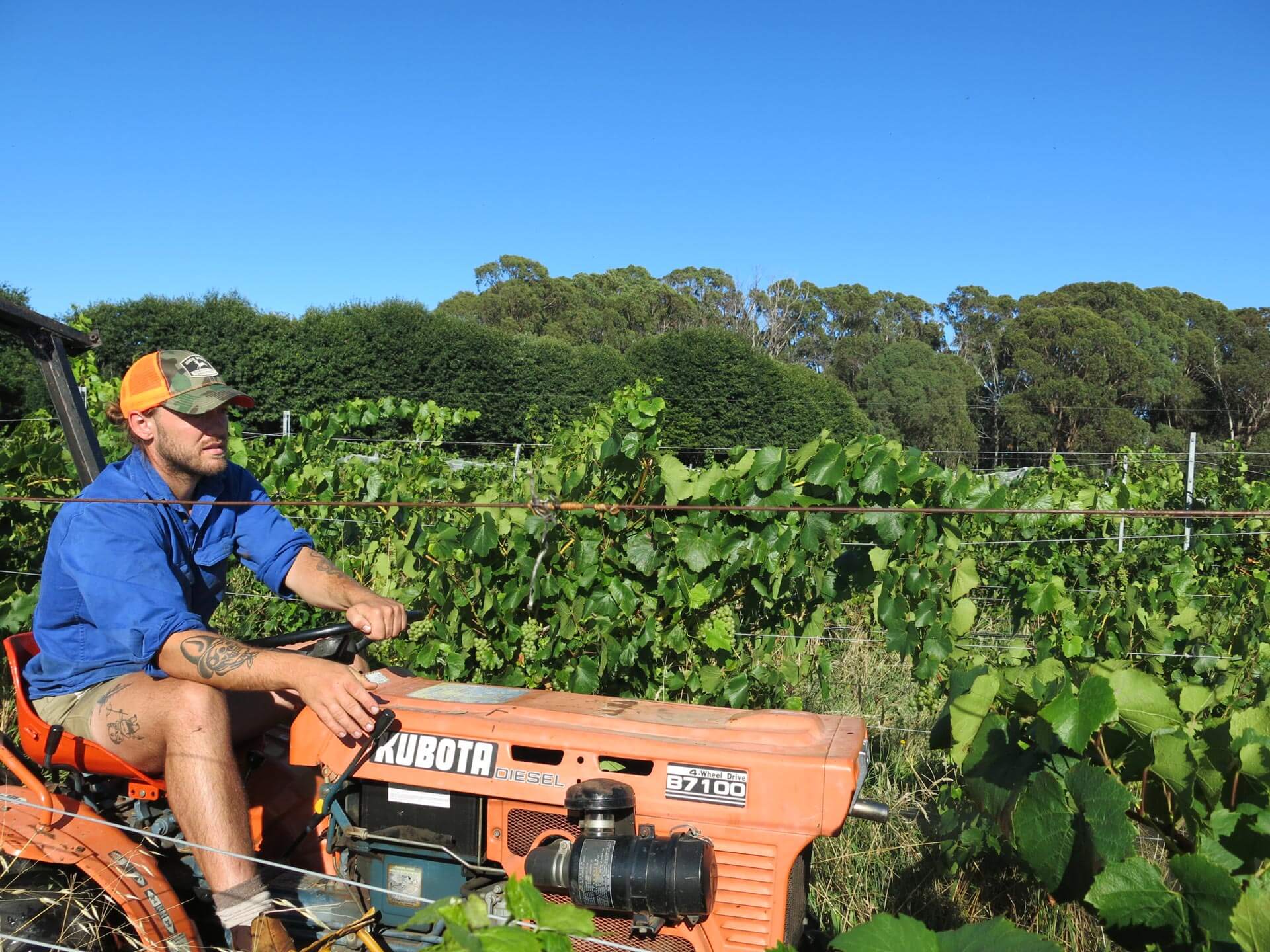
Wedged between the Black Summer bushfires and the pandemic pushing into full bloom, Charles Osborne pitched in and launched Dazma Wine Company, with fruit sourced from Northern Victoria. That first release consisted of three wines, a vermentino, a shiraz and a field blend of some 13 varieties – including such exotica as kerner, muscat ottonel, ehrenfelser, scheurebe, siegerrebe and rotgipfler – that were picked and fermented together. His wines are all vineyard specific, and they are all very much in the lo-fi camp, with Osborne keen to make democratically affordable and enjoyable wines.
  • Producer

  • Region

    King Valley

  • RRP

    $

  • Vintage

  • Variety/Varieties

  • Alc./Vol.

    %

Wedged between the Black Summer bushfires and the pandemic pushing into full bloom, Charles Osborne pitched in and launched Dazma Wine Company, with fruit sourced from Northern Victoria. That first release consisted of three wines, a vermentino, a shiraz and a field blend of some 13 varieties – including such exotica as kerner, muscat ottonel, ehrenfelser, scheurebe, siegerrebe and rotgipfler – that were picked and fermented together. His wines are all vineyard specific, and they are all very much in the lo-fi camp, with Osborne keen to make democratically affordable and enjoyable wines.

“I have many non-wine-drinking friends,” says Osborne. “I wanted to make wines that were approachable for the people around me. A wine that could be drunk from a mug around the campfire or a glass over dinner. The wines are approachable and don’t discriminate to any type of beverage drinker.”

Osborne’s first vintage was in 2015 alongside Sam Cook and Alastair Reed at Konpira Maru, with the pair remaining a big influence. “I am lucky enough to have been around Konpira Maru from the early days of my career,” says Osborne. “They have been an undeniable influence on my winemaking style. Al and Sam have little trepidation when it comes to developing a new wine, and this has definitely influenced my approach.”

“I work with multiple sites throughout the valley. I have vineyards that are high elevation and low elevation, which gives me the opportunity for high-elevation cool climate wines as well as moderate-climate wines.”

While that influence has been a steady one for Osborne, he also worked at Yealands in Marlborough, New Zealand, and in 2018, he took a role with a local commercial winery. His day job as a lead cellar hand saw him “crushing upwards of 18,000 tons a year for Coles and Aldi” until 2020, when he launched Dazma, while also cementing an assistant winemaking role at Konpira Maru, where he makes his wines. “Al and Sam have been a huge part of my journey and helping me get Dazma up and running,” says Osborne. “I look forward to working alongside them for many years to come.”

Working for a large-scale commercial operation also gave Osborne plenty of grape-growing contacts. “One of the first wineries I worked at I contract made wine for large organisations,” he says. “Most of the fruit came from the King Valley, Riverina and Sunraysia. It felt fitting to continue working with growers in these regions and further grow my knowledge of the areas. I work with multiple sites throughout the valley. I have vineyards that are high elevation and low elevation, which gives me the opportunity for high-elevation cool climate wines as well as moderate-climate wines.”

“I wanted to make wines that were approachable for the people around me,” says Osborne. “A wine that could be drunk from a mug around the campfire or a glass over dinner. The wines are approachable and don’t discriminate to any type of beverage drinker.”

The Dazma range has expanded from those first wines to include a gewürztraminer from the Cavedon Vineyard in Whitfield that spent a few weeks on skins, was raised in a mix of new and old oak, then bottled cloudy under crown seal. A vermentino pét-nat joined the light skin contact version, with both from the Chalmers Merbein Vineyard, while the ‘Field Blend’ (pinot meunier, friulano, pinot gris, riesling, chardonnay, traminer and small parcels of kerner, muscat ottonel, ehrenfelser, scheurebe, siegerrebe, rotgipfler and zierfandlers) made a reappearance, but this time it spent 13 weeks on skins.

Osborne’s work at Dazma runs parallel to his role at Konpira Maru, where he is helping to pursue a more sustainable approach, while growing his own brand. “We’re creating a water-friendly winery with greater wastewater treatment or recycling, where a winery can use almost 100 per cent treated recycled water,” he says. “It’s a project myself and Al are currently working on. In the next 5 to 10 years, I would love to continue growing Dazma and continue working with the amazing winemakers around me. As well as being able to continue growing relationships with my growers and learning the best way to approach their fruit.”

Charles Osborne

GET FIRST ACCESS TO THE NEXT WINE ICONS – DELIVERED

Find out more

Each month, get 3 bottles of our freshest discoveries. We taste thousands to bring you the best.

Join us and support emerging winemakers, sustainable vineyards, and the development of young professionals.

Find out more
“One of the highlights of my drinking year.”
— Max Allen, Wine Writer
“The future of wine in Australia.”
— Broadsheet
“The cutting edge of Australian wine.”
— The Australian
Phoebe Grant launched Nature of the Beast barely out of here teens, unveiling a compact but serenely mature suite of wines from the 2020 vintage. Those wines were made from chardonnay and nebbiolo, a rosé, which are varieties that are the cornerstones of her family’s Beechworth vineyard, Traviarti, though grant sources fruit from the Macedon Ranges and North East Victoria. A barbera joined the ranks in 2021, with all wines made with texture and savoury interest as the mainstays.
  • Producer

  • Region

    King Valley Macedon Ranges

  • RRP

    $

  • Vintage

  • Variety/Varieties

  • Alc./Vol.

    %

Phoebe Grant launched Nature of the Beast barely out of here teens, unveiling a compact but serenely mature suite of wines from the 2020 vintage. Those wines were made from chardonnay and nebbiolo, a rosé, which are varieties that are the cornerstones of her family’s Beechworth vineyard, Traviarti, though grant sources fruit from the Macedon Ranges and North East Victoria. A barbera joined the ranks in 2021, with all wines made with texture and savoury interest as the mainstays.

“My whole life has been driven by food and wine,” Grant says. “I’ve been lucky enough to grow up in a household with a revolving door of dinner party guests, and one thing that always stood out to me was the joy and conversation wine can bring. This is exactly why I make wine; I want to be a contributing factor to a great meal. Nothing has excited me more since starting to make my own wine than seeing people enjoy it over a meal, both in my home as well as spotting it when I’ve been dining out.”

“I’m all about texture. It’s my main interest. I try to make textural and savoury wines that are indicative of variety and place.”

It’s fair to say that Phoebe Grant grew up with winemaking in her blood, with her family owning Beechworth’s Traviarti. “I’ve been indoctrinated with nebbiolo and chardonnay from a young age,” she says. “I’ve spent my whole life at the dinner table thinking about what I’m putting in my mouth, so winemaking was always going to be a natural progression.”

No doubt this home schooling accelerated the process for Grant to make her own wine, with two vintages of Nature of the Beast made and another just commencing, and all at the age of 22 on the eve of vintage ’22. While she has always been involved at the family vineyard, she credits formal vintages at Rutherglen Estates with Marc Scalzo (whose home project is Beechworth’s Piano Piano) as being critical to her practical apprenticeship.

“I’ve done two vintages, 2019 and ’20 under Marc Scalzo’s tutelage, while helping Chris Catlow at Sentiō and Peter Graham at Domenica, along with my father,” Grant says. “Being able to work and taste with Chris and Pete has been an absolute privilege; the way they both spend their time considering every aspect is incredible. The finesse, attention to detail and generosity they convey when tasting has been an incredible motivator for me. Formal studies are not off the table, but I am enjoying where I’m at for now.”

Grant started Nature of the Beast in the 2020 vintage, which was an especially challenging one in North East Victoria, with smoke taint wiping out many vineyards. “I was lucky enough that the vineyard I bought nebbiolo from for rosé was just in the right pocket of the King Valley with the wind on my side,” she says. “The fruit ended up coming off earlier than I would’ve liked, but I still managed to create a wine that was exciting and of the style I was chasing: savoury and textural.”

That wine was released in the same year, marking Grant’s commercial debut, but there was also a chardonnay in barrel from 2020, with fruit sourced from the esteemed Cope-Williams Vineyard in Romsey. Vintage 2021 saw a barbera added, with fruit coming from the King Valley – the Corsini Vineyard in the King Valley township, and the Cavicchiolo vineyard in Myrrhee.

“I grew up in Beechworth, spending a lot of time in the King Valley when my family had a vineyard there, so I know both regions really well,” says Grant. “I also have personal connections with the growers I buy fruit from. I went to school with their children, or I’ve known them since I was a kid driving around vineyards with my dad. It’s so nice to have such a personal connection to the fruit you use, especially when you don’t grow it yourself. It makes it even more rewarding when the wines do justice to all the hard work the growers put in.”

Grant is at pains to point out that she’s at the very beginning of a long journey. “I’m still starting out and trying to wrap my head around what my future holds,” she says, “I’d love to make a Beechworth chardonnay somewhere down the track, but other than that I’m just really excited to expand my knowledge and hopefully reflect that in the bottles I produce.”

Although Grant is clearly leaving her options open, her stylistic focus is not in question. “I’m all about texture,” she says. “It’s my main interest. I try to make textural and savoury wines that are indicative of variety and place.”

Phoebe Grant

GET FIRST ACCESS TO THE NEXT WINE ICONS – DELIVERED

Find out more

Each month, get 3 bottles of our freshest discoveries. We taste thousands to bring you the best.

Join us and support emerging winemakers, sustainable vineyards, and the development of young professionals.

Find out more
“One of the highlights of my drinking year.”
— Max Allen, Wine Writer
“The future of wine in Australia.”
— Broadsheet
“The cutting edge of Australian wine.”
— The Australian
Cavedon Wines is the third-generation manifestation of a pioneering King Valley vineyard, with Gabe O’Brien making micro-batches of wine to celebrate the hard work of his father-in-law over 40 plus years, who helped pioneer and then revolutionise grape-growing in the region. O’Brien is starting to do the same for winemaking, introducing styles less common in the district, including skin contact on white grapes, sparkling gewürztraminer, nouveau reds and bottle fermenting prosecco to make both col fondo and zero dosage wines.
  • Producer

  • Region

    King Valley

  • RRP

    $

  • Vintage

  • Variety/Varieties

  • Alc./Vol.

    %

Cavedon Wines is the third-generation manifestation of a pioneering King Valley vineyard, with Gabe O’Brien making micro-batches of wine to celebrate the hard work of his father-in-law over 40 plus years, who helped pioneer and then revolutionise grape-growing in the region. O’Brien is starting to do the same for winemaking, introducing styles less common in the district, including skin contact on white grapes, sparkling gewürztraminer, nouveau reds and bottle fermenting prosecco to make both col fondo and zero dosage wines.

The Cavedon Vineyard, in Victoria’s King Valley, was set up as a contract business, a source of grapes for other makers that was first planted by Dino Cavedon in 1977. And it still largely operates as such, but with the involvement of his daughter Pia and her husband Gabe O’Brien, that vineyard has also become the source of their own family label, which was launched in 2020.

“It began after Dino started making plans to slow down,” says O’Brien. “The business thrived and developed a reputation for quality among local winemakers. But he had no succession plan. He had no-one to take over the vineyard. Pia and I were living in Torquay at the time, and when Dino said he was soon wanting to hang up the boots, we moved back. We couldn’t watch these abundant vines – 44 years of hard work – turn to nothing.”


“We spent each day meticulously caring for these grapes and at the end of the year, every grape left the vineyard. Which is great, of course. As a grower, you want that. But we just wanted more to show for the year's work – for 40-odd years of work, rather. We wanted to have a wine that told the story of our vineyard. I guess we also got excited about introducing new styles and approaches into the King Valley.”

The pair had taken on the responsibility of managing the site in 2017, with the first wines made from the following harvest. “We began making wine in vintage ’18, with the help of a couple of winemaking texts and guidance from a couple of local winemakers,” says O’Brien, noting that he has no formal winemaking education.

“When Pia and I returned to the farm and began working with Dino, we were a little unfulfilled. We spent each day meticulously caring for these grapes and at the end of the year, every grape left the vineyard. Which is great, of course. As a grower, you want that. But we just wanted more to show for the year’s work – for 40-odd years of work, rather. We wanted to have a wine that told the story of our vineyard. I guess we also got excited about introducing new styles and approaches into the King Valley.”


The site was first planted by Cavedon with his brother and their father, who O’Brien notes were some of the viticultural pioneers of the region. “The Department of Agriculture partnered with Dino so they could amass data and help facilitate the innovation of quality grape-growing in the region. Over this time, Dino helped innovate some of the local viticultural methods used today. Particularly in trellising. And he has been meticulous in every decision on the vineyard since.”

That thoughtful work amongst the vines continues today, which has seen a revised water management plan implemented, as well as increased nutrient inputs and a pest management plan that limits the need for chemical inputs. O’Brien also notes that they are in the process of grafting and replanting, in the quest for the ideal mix of varieties.

“The label has been a creative outlet for us. We’ve had a lot of fun taking on new styles and exploring what we can do with our fruit, and that’s the direction we want to continue to take. Our winemaking is still in its youth, so there’s still plenty of room to expand with different methods and varieties over the next few years.

“Almost every noble grape has been grown on the vineyard, initially, the family grew common varieties of the 70s, like riesling and chardonnay, then shiraz and merlot. Dino then started a new plot where he began planting Italian varieties, like pinot grigio, barbera, and sangiovese. He was one of the first growers to plant Italian varieties in the region. We planted and grafted three new varieties in 2021: mencía, grenache and grüner veltliner. They’re definitely not the first varieties that come to mind for the king valley, but we know they’ll thrive on our site and suit the style of wines we want to make.”

The early focus was on prosecco, gewürztraminer and albariño, with the latter grafted over in 2018, but a pinot noir and a pinot grigio also feature. Prosecco has perhaps become the lead variety in these early stages, with two bottlings in their tiny total production. Both are bottle fermented, with one disgorged but left super dry with zero dosage, while the other is also dry but not disgorged, in the ancient Italian style of col fondo, where the lees sediment is left in the bottle, adding texture to the finished wine.

More recently, red wines made in bright and forward style have joined the stable. “We’ve developed a bit of an affinity for cab-mac,” says O’Brien. “We’re really loving our nouveau style in the sangiovese, and we’ll be looking at making a similar style with our tempranillo. And you never know, there’ve been a few wines that’ve come about super last minute. If a variety is looking too good to pass up and staring at me every day in the vineyard, we’ll just go for it. A bit like our sparkling gewürztraminer that we’re releasing soon.”

That wine comes from the 2021 harvest and is due for release in ’23, says O’Brien, who notes that it is one of their most experimental wines to date. “It combines one of our favourite varieties with one of our favourite winemaking techniques: cab mac. It’s gewürz on steroids, and we love how it’s turned out.”

O’Brien notes that they still see themselves as grape-growers firstly, and then as winemakers. “As a family, we dedicate ourselves to growing the best possible fruit we can each season, of which the majority is sold off under contract. Our concept is to take a small percentage of only our very best fruit of the season and make a limited selection of boutique wine from it.”

All the Cavedon wines are made in tiny batches onsite by O’Brien, with some equipment – and a bit of advice – borrowed from neighbouring wineries. “The label has been a creative outlet for us. We’ve had a lot of fun taking on new styles and exploring what we can do with our fruit, and that’s the direction we want to continue to take. Our winemaking is still in its youth, so there’s still plenty of room to expand with different methods and varieties over the next few years.

“In this sense, as younger winemakers and growers in the region, we’re trying to step outside what everyone else is doing here. We take very small parcels of our best fruit, and we use minimal intervention, so we can champion the quality and nuances of these grapes and the microclimate here. Like Dino did 44 years ago, we’re doing our best to experiment and introduce new approaches in the region, doing our bit to keep our little wine community fresh and vibrant. That’s our hope, anyway.”

Gabe O’Brien

GET FIRST ACCESS TO THE NEXT WINE ICONS – DELIVERED

Find out more

Each month, get 3 bottles of our freshest discoveries. We taste thousands to bring you the best.

Join us and support emerging winemakers, sustainable vineyards, and the development of young professionals.

Find out more
“One of the highlights of my drinking year.”
— Max Allen, Wine Writer
“The future of wine in Australia.”
— Broadsheet
“The cutting edge of Australian wine.”
— The Australian
2021 Dal Zotto ‘L’Immigrante’ Barbera

The Next Wine Icons – Delivered

Each month, get 3 bottles of fresh discoveries.
We taste thousands to bring you the best.

Bookmark this job

Please sign in or create account as candidate to bookmark this job

Save this search

Please sign in or create account to save this search

create resume

Create Resume

Please sign in or create account as candidate to create a resume