2024 L’Anima ‘Sobremesa’ Passvm Muscat Blanc McLaren Vale

Read more
2024 L’Anima ‘Sobremesa’ Passvm Muscat Blanc
Winner of the Danger Zone trophy at the 20th Annual YGOW Awards, this could be filed under “dessert wine” — but we’d rather pour it as an aperitif, the thing that kicks an evening off. Built from three separate picks of fruit and layered vinification, it carries serious complexity in the glass.
  • Producer

    L’Anima

  • Region

    McLaren Vale

  • RRP

    $40

  • Vintage

    2024

  • Variety/Varieties

    Muscat blanc à petits grains

  • Alc./Vol.

    13.5%

Imagine apricot jam on hot toast, a splash of orange marmalade and a ginger snap crumbled in — sweet, sure, but with a savoury, salty edge that keeps it from ever feeling heavy. Delicious cold from the fridge with a wedge of cheese, any time of day you fancy.

Michael Williams launched L’Anima from the 2024 vintage, distilling a winemaking education built across Ngeringa, several years in Tuscany, SC Pannell, Moorilla and time as winemaker under Andre Bondar into a small, considered range from McLaren Vale. The label is built entirely around climate-appropriate Mediterranean varieties — fiano, vermentino, sangiovese, grenache, nero d’avola and muscat blanc — chosen because they demand less water in the vineyard and fewer inputs in the winery, with a genuine focus on reducing the label’s carbon footprint through packaging as well. Wines are fermented and matured in clay and sandstone amphora and large-format Slavonian oak, built around the idea of wine as something made for the table.

The ‘Sobremesa’ Passvm is Williams’s nod to the sweet muscats of southeastern Sicily, made using the passito method: hand-picked Muscat Blanc à Petit Grains, brought in across three separate picks — one for drying, one at normal ripeness, one left extra time on the vine — then hand-sorted onto racks and dried in the sun for six weeks before four weeks of skin maceration and maturation in old French oak. The wine took out the Danger Zone trophy at the 20th Annual Young Gun of Wine Awards, recognising exactly this kind of risk-taking, original winemaking.

Tasting note

There’s a Medusa-like pull to the perfume on this one — dense, alluring, almost impossible to look away from. Homemade apricot jam and almond kernels spread on warm toast lead the charge, layered with orange marmalade and blossom, fresh straw and baking gingersnaps, with dried raisin and ripe peach humming away underneath. It smells rich and luscious, but a real freshness cuts through as soon as it hits the palate — apricot compote sharpened with a splash of lemon juice, candied ginger, orange peel garnished with thyme, and a savoury, grilled-nut rancio note that keeps things honest. There’s a little textural grip too, a whisper of tannin from the skin contact, framing the sweetness rather than letting it run away. Sweet, yes, but never remotely cloying — Williams has built real tension into this wine, helped along by the portion of muscat picked at regular ripeness rather than dried.

When to drink it

Forget relegating this wine to dessert — we love it as an aperitif. Open it to start the evening, or to start any occasion. It’s so complex and beautifully balanced that it deserves some attention, and it’s dangerously delicious to boot. Open it to persuade a stubborn wine-snob acquaintance of the merits of sweet wine. Or not — this wine doesn’t need an occasion or an excuse. It’s just gosh-darn delicious, whenever you feel like drinking it.

Think dusky nights on the back deck, the hum of crickets, and all of the fried, crunchy things. You’re fond of the classics, so prawn toasts and lemon chicken it is, while you raise a glass to that lovely old-school Chinese place down the road.

Themes of this wine

Muscat Blanc

Muscat Blanc à Petit Grains is considered the oldest and finest of the muscat family, prized for its intensely perfumed, grapey aromatics and long history stretching from ancient Greece through southern Europe. It shows up in styles ranging from light, spritzy and off-dry to deeply sweet fortified and dried-grape wines, with Italy’s Moscato d’Asti and the sweet muscats of Sicily’s southeastern tip among its most famous expressions. In Australia it has traditionally played a supporting role in fortified wine, but producers working with alternative techniques are increasingly finding new ways to let its natural perfume shine.

McLaren Vale

Just south of Adelaide and hugging the coastline of Gulf St Vincent, McLaren Vale is best known for full-bodied shiraz and grenache, built on a warm Mediterranean climate tempered by sea breezes off the gulf. That same maritime influence and diversity of soils — from sandy loams to ancient ironstone — is increasingly drawing producers toward Mediterranean varieties beyond the region’s traditional strengths, chasing wines that need less water and suit the climate as it stands today, not as it once was.

Passito

Passito, or appassimento, is one of winemaking’s oldest tricks: grapes are picked and then dried, whether on straw mats, hanging racks or in the sun, before fermentation. As the grapes dry, water evaporates and sugars, acids and flavour compounds concentrate, producing wines of far greater intensity than the same fruit would give if pressed fresh. The technique underpins some of Italy’s most famous wines, from Amarone to Vin Santo, and rewards producers willing to accept the labour, time and risk of drying fruit by hand rather than simply picking and pressing.

Explore Further

2024 L’Anima ‘Sobremesa’ Passvm Muscat Blanc

GET FIRST ACCESS TO THE NEXT WINE ICONS – DELIVERED

Find out more

Each month, get 3 bottles of our freshest discoveries. We taste thousands to bring you the best.

Join us and support emerging winemakers, sustainable vineyards, and the development of young professionals.

Find out more
“One of the highlights of my drinking year.”
— Max Allen, Wine Writer
“The future of wine in Australia.”
— Broadsheet
“The cutting edge of Australian wine.”
— The Australian
Fabiano Minchella is a born-and-bred McLaren Vale winemaker whose By Fabiano label makes a case – quietly but with mounting conviction – that the south of Italy belongs in the Vale. Launched from the 2020 vintage, the range spans negroamaro, primitivo, fiano, vermentino, greco, a skin-contact macerato and a rosato, all from estate fruit and all made with a philosophy rooted in Minchella’s extended time working in Basilicata and Puglia. The wines are a grower-maker proposition: the family owns and manages all vineyards, with a purpose-planted Italian-style block on the winery site – seven varieties grown at unusually tight spacing in the Italian tradition – the physical embodiment of the experiment. Southern Italian varieties in McLaren Vale is no longer a novelty; By Fabiano is one of the labels that has done the most to prove it shouldn’t be.
  • Producer

  • Region

    McLaren Vale

  • RRP

    $

  • Vintage

  • Variety/Varieties

  • Alc./Vol.

    %

Fabiano Minchella is a born-and-bred McLaren Vale winemaker whose By Fabiano label makes a case – quietly but with mounting conviction – that the south of Italy belongs in the Vale. Launched from the 2020 vintage, the range spans negroamaro, primitivo, fiano, vermentino, greco, a skin-contact macerato and a rosato, all from estate fruit and all made with a philosophy rooted in Minchella’s extended time working in Basilicata and Puglia. The wines are a grower-maker proposition: the family owns and manages all vineyards, with a purpose-planted Italian-style block on the winery site – seven varieties grown at unusually tight spacing in the Italian tradition – the physical embodiment of the experiment. Southern Italian varieties in McLaren Vale is no longer a novelty; By Fabiano is one of the labels that has done the most to prove it shouldn’t be.

Minchella grew up on a family property in McLaren Vale, graduated in oenology and viticulture from the University of Adelaide in 2011, and built his early career across Two Hands, Rosemount and Di Fabio Estate before seven years as winemaker at The Hedonist. Overseas, his Italian education was assembled across multiple regions and mentors: Okanagan in Canada, Provence, Basilicata and then two consecutive seasons in Puglia split across wineries in Manduria and Gioia del Colle. It was in Basilicata that the deepest influence took hold – living with Dennis Verdecchia, now head winemaker at Farnese, who instilled in Minchella a precision-oriented philosophy and a passion for aglianico, greco and fiano that has never left him. Puglia, especially time at Tenuta Chiaromonte, sharpened his affection for primitivo and negroamaro. And a private back-vintage tasting spanning 1991 to 2015 at Arnaldo Caprai in Umbria – the estate that has done more than any other to establish sagrantino as a noble variety – burned itself into his memory as the kind of thing a winemaker chases for the rest of their career. “That private back vintage tasting from ‘91 to ‘15 vintages at Arnaldo Caprai is burnt in my memory and inspires me to make sagrantino,” he says. More Italian varieties, he notes, are coming.

The label is built on three convictions Minchella formed during those Italian years. First: that southern Italian varieties are serious, not merely alternative. “I wanted to show that Italy is not only about Tuscany and Piedmont and that the southern varieties can be serious, delicious and noble,” he says. Second: that those varieties suit McLaren Vale’s Mediterranean climate in a way that has been underexplored. Third: that the legacy varieties – shiraz, grenache, cabernet – may not be the most sustainable long-term, either in the vineyard or in the market. “Wines are grown, not made,” he says, a conviction he learned in Europe and has since staked a vineyard on.

“I wanted to show the potential to make wines from Italian varieties that suit the McLaren Vale terroir.”

That vineyard is the most tangible expression of the philosophy. Seven Italian varieties – including primitivo, negroamaro, greco, fiano and vermentino – planted on the winery site at 2.4 metre row width and 0.9 metre vine spacing, trained to single-arm guyot using the Simonit & Sirch methodology developed in Italy and focused on long-term vine health and sap flow. The spacing is tight by Australian standards, and deliberately so. “My theory with the tighter spacings is that although our Australian soils are the oldest in the world, the vineyards I grew up with are quite healthy and vigorous and not lacking,” he says. “I wanted to increase competition to restrict crop load and put more stress on the vines, with the intention to concentrate flavours.” The single-arm guyot reduces stored carbohydrate reserves by limiting unnecessary structural wood, while making manual shoot-thinning, leaf plucking and hand-harvesting more practical than traditional spur-pruned cordon systems allow. The southern side of the canopy is specifically leaf-plucked to manage sunlight exposure on the fruit. “I wanted to see if vineyards more in line with Italy produced better wines in McLaren Vale.”

The two wines at the core of the range – negroamaro from the Stocks Hill vineyard and primitivo from the College Block – both come from fruit Minchella has a direct hand in growing. The negroamaro is made in a fresh, medium-bodied style that draws deliberately on the lighter expressions he encountered in Puglia rather than the heavy, extracted versions that characterise much of the commercial category. The primitivo comes in two versions: a conventionally made bottling and a Naturale, which sees the wine made with zero additions and no sulphur. “I wanted to show the potential to make wines from Italian varieties that suit the McLaren Vale terroir,” he says. “To pay homage to my heritage, and to show that the southern varieties can be serious, delicious and noble.”

The family business supports the whole operation: the family owns the vines, processing and bottling; Giovanni and Oliver manage the vineyards; Fabiano and his sister Gab make and bottle the wines. It is as close to a vertically integrated family winemaking operation as the Vale has, with a lineage that runs through the Minchella family’s Italian roots and out through the red earth of McLaren Vale. “It is not the fruit that is to be adapted to his style,” as the label puts it, “but rather his style that adapts to the fruit’s expression.” The sagrantino is still coming. Watch this space.

Fabiano Minchella

GET FIRST ACCESS TO THE NEXT WINE ICONS – DELIVERED

Find out more

Each month, get 3 bottles of our freshest discoveries. We taste thousands to bring you the best.

Join us and support emerging winemakers, sustainable vineyards, and the development of young professionals.

Find out more
“One of the highlights of my drinking year.”
— Max Allen, Wine Writer
“The future of wine in Australia.”
— Broadsheet
“The cutting edge of Australian wine.”
— The Australian
Ashleigh Seymour spent more than a decade making wine at Avignonesi – Italy’s largest biodynamic estate in Montepulciano, Tuscany – before Covid, young children and the pull of home brought her back to Australia in 2021. After several years as winemaker at McLaren Vale biodynamic pioneer Paxton Wines, she launched her own label, Vino Selvatico, from the 2023 vintage: two wines, a McLaren Vale grenache and a fiano, made from organically and biodynamically farmed fruit with spontaneous fermentation, minimal sulphur, no fining, and a sensibility shaped by two continents. The name means wild wine. The wines live up to it.
  • Producer

  • Region

    McLaren Vale

  • RRP

    $

  • Vintage

  • Variety/Varieties

  • Alc./Vol.

    %

Ashleigh Seymour spent more than a decade making wine at Avignonesi – Italy’s largest biodynamic estate in Montepulciano, Tuscany – before Covid, young children and the pull of home brought her back to Australia in 2021. After several years as winemaker at McLaren Vale biodynamic pioneer Paxton Wines, she launched her own label, Vino Selvatico, from the 2023 vintage: two wines, a McLaren Vale grenache and a fiano, made from organically and biodynamically farmed fruit with spontaneous fermentation, minimal sulphur, no fining, and a sensibility shaped by two continents. The name means wild wine. The wines live up to it.

Seymour grew up on the edge of the Yarra Valley where winery visits were part of childhood, moved to Adelaide to study winemaking in 2005, and worked her way through a formative series of cellars – Peter Lehmann, The Lane Vineyard, André Perret in Condrieu – before a vintage at Avignonesi in 2010 turned into eleven years. “It took me a journey from Australia, to Italy and back again to feel ready to make my own wine,” she says, “and that journey is reflected in the style and expression of the varieties.” Those years at Avignonesi, mentored by Giampaolo Chiettini and Adriano Zago and influenced by producers like Elisabetta Foradori, immersed her in biodynamics not just as a farming practice but as a philosophy. “Not just for the earth, soil and wine but as a way of life,” she says. “We breathe, feel and touch the different seasons, living in flow and not to the monotonous beat of sameness all year round. This is what inspires my winemaking – the basics of producing something magnificent which breathes the seasons of life on earth.”

“It took me a journey from Australia, to Italy and back again to feel ready to make my own wine, and that journey is reflected in the style and expression of the varieties.”
“We breathe, feel and touch the different seasons, living in flow and not to the monotonous beat of sameness all year round. This is what inspires my winemaking – the basics of producing something magnificent which breathes the seasons of life on earth.”

The return to Australia in late 2020 – prompted by Covid, young children, and the need for change – landed her at Paxton Wines in McLaren Vale, where she spent four years before being made redundant in August 2025. She is now consulting to Shirvington Wines and working with BHF Technologies alongside Vino Selvatico. The Vale, she says, has a magnetism that doesn’t let you leave. “Ocean, hills, wine, food, culture. Amazing people. Great energy.” More specifically, she was drawn to its complex geology, its Mediterranean climate, and its remarkable concentration of organic and biodynamic farming – nearly 40 per cent of McLaren Vale’s vineyards are certified, the highest proportion of any Australian region. “McLaren Vale is a uniquely collaborative place,” she says. “It doesn’t seem to matter if you interact with original families or young recent graduates, everyone is open and willing to share their experiences or lend you a barrel washer to make McLaren Vale a better place. Maybe it’s the sea spray or the whispering old vines, or the ancient rocks – whatever it is, everyone is bound by a deep connection and love of the landscape and each other, and that’s what makes it such a beautiful and welcoming place to make wine.”

“McLaren Vale is a uniquely collaborative place. It doesn’t seem to matter if you interact with original families or young recent graduates, everyone is open and willing to share their experiences or lend you a barrel washer to make McLaren Vale a better place.”

The idea for Vino Selvatico had been bubbling since she was still in Italy. What finally made it happen was a push from her husband. “I probably wouldn’t have done it without him pushing me,” she says, “which possibly initially I thought was because he missed working in wine and wanted to dabble a bit, but I now realise he pushed me because he wanted me to have the opportunity to express myself in my winemaking for me and not for someone else.” The reality of launching it has been as unglamorous as it is for most. “You make mistakes, you do things the expensive way because you didn’t know better, things don’t go to plan or your wines sit without labels for an extended period of time before you get your shit together – but somehow you just hustle and glue it all together with grape juice and hope it sticks.” She is candid about the near-misses too: renting the wrong kind of trailer to move a pallet tank, being a bit sketchy on the forklift tending to her own wines after long vintage hours at her day job, sending the wrong wine to the wrong person. “There’s only two wines so far – it shouldn’t be that hard!”

Grenache drew her in as the natural starting point. “I spent a long time in Tuscany where sangiovese is the long-time queen of grapes,” she says, “and although sangiovese does exceptionally well in McLaren Vale, I felt that the equivalent variety for McLaren Vale was grenache. It’s been here forever. It has had periods in history where it was momentarily overshadowed by other French varieties but has come back, stronger than ever, especially in its pure form. It’s also very climatically adapted to McLaren Vale and thrives here as it has done since the 1800s.” The grenache comes from Paxton’s Thomas Block, sand-dominated soils on the valley floor, made with spontaneous fermentation and a winemaker’s golden rule distilled from years working with the variety’s Italian cousin: “Grenache can’t suck as much air as sangiovese.” The fiano is newer territory – a variety she has tasted widely and admired, inspired in part by her winemaker friend Raffaele Pagano from Joaquin in Campania. Rather than chasing the more reductive, citrus-driven style common in southern Italy, she looked further south for her reference point. “Compared to its home in Avellino, McLaren Vale is perhaps not quite cold enough in winter,” she says. “This is why I decided to pursue a more skin-contact, opulent version of fiano like I have seen made on Capri island, off Naples.” Fiano is not riesling, she is at pains to point out: “Please people, give it some respect.”

The winemaking philosophy runs directly from her biodynamic formation. Organic and biodynamic fruit – from Paxton and the Brown family – spontaneous fermentation, minimal sulphur (both wines under 80ppm total), a touch of bentonite on the fiano, technical corks chosen partly out of eleven years of Italian habit. “My whole winemaking career has been in organic and biodynamic wineries and it changed who I am as a person, as a mother and the impact I have on the planet,” she says. “I don’t think we should poison the earth making a luxury.” She uses Australian-produced bottles, specifically because she didn’t want them to have travelled the world empty before being filled. “My value statement is that I will foster connection between people through wine, in a socially, economically and most of all environmentally sustainable and thoughtful manner. I make all my decisions based around this.”

Flavour, though, remains the first principle before any of it. “Flavour is the main ingredient for me – it needs to be there before anything else,” she says. “Ideologically, many of us are chasing some incarnation of perfection in our wines; maybe I will get there some day, but for now I will focus on varieties flaunting themselves as if nobody is watching.” Longer term, she wants to experiment with sangiovese in the Australian context, and has an ambition to one day make wine in Italy and bring it back – “not as competition but as complement.” Vino Selvatico, though small, is already the fullest expression of everything she has become.

Ashleigh Seymour

GET FIRST ACCESS TO THE NEXT WINE ICONS – DELIVERED

Find out more

Each month, get 3 bottles of our freshest discoveries. We taste thousands to bring you the best.

Join us and support emerging winemakers, sustainable vineyards, and the development of young professionals.

Find out more
“One of the highlights of my drinking year.”
— Max Allen, Wine Writer
“The future of wine in Australia.”
— Broadsheet
“The cutting edge of Australian wine.”
— The Australian
Ollie Bevan is a first-generation winegrower making shiraz and grenache from a small organic (not certified) estate in Blewitt Springs, McLaren Vale – one of the subregion’s most compelling pockets for both varieties. Parea, launched from the 2022 vintage, is built around a single dry-farmed shiraz vineyard planted in 1992 and a young block of own-rooted, bush-vine grenache planted from cuttings Bevan took himself from highly regarded local sites. The wines are made with minimal intervention – sulphur the only addition, unfined and unfiltered – and a vineyard-first philosophy that prizes site and seasonal honesty over stylistic consistency. Small, serious, and deeply rooted in place.
  • Producer

  • Region

    McLaren Vale South Australia

  • RRP

    $

  • Vintage

  • Variety/Varieties

  • Alc./Vol.

    %

Ollie Bevan is a first-generation winegrower making shiraz and grenache from a small organic (not certified) estate in Blewitt Springs, McLaren Vale – one of the subregion’s most compelling pockets for both varieties. Parea, launched from the 2022 vintage, is built around a single dry-farmed shiraz vineyard planted in 1992 and a young block of own-rooted, bush-vine grenache planted from cuttings Bevan took himself from highly regarded local sites. The wines are made with minimal intervention – sulphur the only addition, unfined and unfiltered – and a vineyard-first philosophy that prizes site and seasonal honesty over stylistic consistency. Small, serious, and deeply rooted in place.

Ollie Bevan didn’t arrive at wine through family heritage or a formal winemaking degree – he came through a science degree in Melbourne, a wine appreciation elective, and a teacher who opened a door he never closed again. What followed was a self-assembled education: vintages in Barolo and at Steve Pannell in McLaren Vale, then a formative stint with Rémi Jacquemain and Rob Walters at Place of Changing Winds in the Macedon Ranges, a project known for obsessive attention to vineyard and winery detail. Then COVID, which closed off further overseas opportunities and pushed him inward. “I dove deep on various viticultural texts, winemaking podcasts, and a period of great creativity and planning,” he says, “where I doodled labels, imagined winemaking and farming styles, and explored different wine regions around Australia trying to find a place which would suit both my lifestyle and what I wanted to achieve in wine. I had no epiphany or pivotal point – just a gradual realisation that this world and its endless complexities truly satisfy every part of my physical and mental being.”

“The grenache wines being produced from old vineyards scattered around this subregion are so specific and so great that they rival many of the fine wines we are already accustomed to around the world today.”
“This world and its endless complexities truly satisfy every part of my physical and mental being.”

Blewitt Springs was the answer. Bevan grew up in McLaren Vale, and returning after years away gave him a clarity about the subregion he hadn’t had before. “Coming back and working in my home region after spending many years away, I found a renewed sense of love for my home region and its people,” he says. “Every day I spend here in McLaren Vale, my cup of fulfilment grows.” The conviction about Blewitt Springs goes beyond sentiment. “I truly believe that Blewitt Springs has the capacity to produce world-class fine wine, and that it already is in the form of grenache. The grenache wines being produced from old vineyards scattered around this subregion are so specific and so great that they rival many of the fine wines we are already accustomed to around the world today.” The region’s sustainability credentials matter too. “Dry farming, low disease pressure and a perfect match between variety and place encourage both sensitive farming and winemaking – I believe that to be a very sustainable model for any wine business and the industry more broadly moving forward.”

The vineyard work is the core of everything Parea does, and Bevan is direct about it. “I would not make my own wine if I couldn’t farm my own fruit,” he says. “This privilege allows experimentation, steep learning, and ultimately more authentic and expressive wines.” Dry farming – growing vines without supplementary irrigation, relying entirely on rainfall and the vine’s own deep root system – is the foundational discipline. “In a hot and dry climate, dry farming presents many challenges, but primarily it forces you to reduce crop loads and watch them carefully in accordance with seasonal influences.” Each vine is pruned to approximately six to eight spurs; shoot-thinning runs to two passes where needed; crop-thinning follows where necessary. “Ultimately, we have more concentrated fruit and much lower sugar levels, which allows us to pick early – between 12 and 13 baumé – while still achieving elevated aromatics, concentrated flavours and balanced phenolics.” The young grenache block, currently irrigated during establishment, is being progressively weaned toward the same dry-grown model through mulching and cover-cropping.

Precision in the vineyard extends to individual vine management. “Certain parts of the vineyard have different growth habits to other parts, so we prune to less buds and shoot-thin more in weaker sections, and the converse in stronger sections,” he says. In 2025, ahead of two significant heatwaves, he dropped all fruit from the youngest grenache vines growing in the shallowest soils at the top of the hill – the section with the least water-holding capacity. After the heatwaves, all remaining vines were treated with concentrated kelp to minimise stress and support recovery. “We essentially never ask too much of the vines,” he says.

The winemaking is as restrained as the farming. Sulphur is the only addition, kept under 50ppm total – “a practical rather than dogmatic approach,” as Bevan describes it. “Sulphur is a very useful tool in maintaining freshness and reducing the risk of certain faults which can cloud the clarity of place in the wines.” Everything is unfined and unfiltered, clarified naturally through extended time in barrel in insulated cellars. Whole-bunch inclusion in the shiraz has been a variable depending on the season – cool, wet years taught him to pull it back. His golden rule, held with appropriate humility: “Pick just before you think a block is ready, and bottle a wine just before you think it is ready. This results in tension in the wine, allowing it to mature steadily both in barrel and in bottle.” He is wary of absolutes. “As soon as I commit to a particular way of doing things, nature contradicts my choice and proves something otherwise.”

What drives him, at the deepest level, is the experience that wine can create. “I always come back to what’s in the glass, and the capacity for a great glass of wine to awaken so much in someone,” he says. “My love for complex and delicious wines that possess the unique ability to transport me to a particular place in the world is what keeps the flame alive.” McLaren Vale, and Blewitt Springs specifically, is the place he keeps being transported back to. The plan is to stay small, add chenin blanc in time, and eventually open a small cellar door on the property. “We hope to gain a small following of likeminded drinkers and thinkers who we would love to welcome to the property.” For a first-generation winegrower working at humble scale, the foundations are quietly impressive.

Ollie Bevan

GET FIRST ACCESS TO THE NEXT WINE ICONS – DELIVERED

Find out more

Each month, get 3 bottles of our freshest discoveries. We taste thousands to bring you the best.

Join us and support emerging winemakers, sustainable vineyards, and the development of young professionals.

Find out more
“One of the highlights of my drinking year.”
— Max Allen, Wine Writer
“The future of wine in Australia.”
— Broadsheet
“The cutting edge of Australian wine.”
— The Australian
Samuel Rumpit is a Hunter Valley-based winemaker whose Noman label – launched from the 2024 vintage – makes small-batch wines from alternative varieties sourced wherever they’re growing best that year, with no intention of repeating a wine or a region from one vintage to the next. The current range spans a McLaren Vale montepulciano, a Hunter Valley fiano and a tempranillo rosé, all made with Hungarian oak, minimal intervention and a deliberate refusal to take wine too seriously. Noman sits at the approachable, exploratory end of the Australian alternative variety conversation – swimming pool wine, as Rumpit calls it, made for you and your mates.
  • Producer

  • Region

    Hunter Valley McLaren Vale

  • RRP

    $

  • Vintage

  • Variety/Varieties

  • Alc./Vol.

    %

Samuel Rumpit is a Hunter Valley-based winemaker whose Noman label – launched from the 2024 vintage – makes small-batch wines from alternative varieties sourced wherever they’re growing best that year, with no intention of repeating a wine or a region from one vintage to the next. The current range spans a McLaren Vale montepulciano, a Hunter Valley fiano and a tempranillo rosé, all made with Hungarian oak, minimal intervention and a deliberate refusal to take wine too seriously. Noman sits at the approachable, exploratory end of the Australian alternative variety conversation – swimming pool wine, as Rumpit calls it, made for you and your mates.

Samuel Rumpit wants to make swimming pool wine. That’s his phrase for it – wines you can drink by the rusted aluminium and frosted glass table with your mates, wines that pair well with a conversation rather than demanding to be the subject of one. “I just reckon as good as wine can be, it’s just wine – it shouldn’t be scary,” he says. “Why should it be any more complicated than picking up a nice looking bottle? I wanted to make wine that could be focused on anything other than the wine.” Noman, launched from the 2024 vintage and based out of the Hunter Valley, is built entirely around that idea: small batches, one tonne at a time, from alternative varieties sourced wherever they’re growing best that year, made with what Rumpit calls “necessary intervention” – as little as possible, as much as needed. The current range spans a McLaren Vale montepulciano, a Hunter Valley fiano, and a tempranillo rosé. There will not be a second vintage of any of them. That’s the whole point.

“I did it slowly – I bought a barrel in 2023, I bought my first fruit in 2024, I bought and designed labels in 2025. It is just step by step to make sure the funds are there. I wasn’t really in any rush to grow and I’m still not in any rush to grow. I just enjoy doing my own thing and if I get burnt out I might just stop for a year and come back to it, who knows.”

The name is drawn from Homer’s Odyssey – the moment Odysseus tells the cyclops Polyphemus his name is Nobody (Noman), so that when the cyclops cries out in pain, no one comes to help. It’s an unlikely source of inspiration for a wine brand, but it suits the spirit of the project: a small figure moving through a large landscape, making wine that earns its place not through pedigree but through what’s in the glass. The road to Noman wound through an agriculture science degree at Charles Sturt University in Wagga, a research winery placement at CSU in collaboration with the CSIRO, then winemaking study while working in industry – cellar hand at Lerida Estate in Canberra, then First Creek in the Hunter Valley, now full-time winemaker at Saddler’s Creek Wines. The label was built incrementally on top of a day job: a Hungarian oak puncheon purchased in 2023, first fruit in 2024, labels designed in 2025. “I did it slowly – I bought a barrel in 2023, I bought my first fruit in 2024, I bought and designed labels in 2025,” he says. “It is just step by step to make sure the funds are there. I wasn’t really in any rush to grow and I’m still not in any rush to grow. I just enjoy doing my own thing and if I get burnt out I might just stop for a year and come back to it, who knows.”

The variety logic is climate-driven and deliberate. Rumpit has no interest in loyalty to a grape or a region – only in finding what’s growing well in a given year, in the right place, from growers farming with genuine care for the soil. His agriculture science background informs how he reads vineyards, and he’s more interested in biodiversity above and below ground than in certification. “Vineyards don’t need to be certified organic to be doing the best they can,” he says. “I have seen certified organic vineyards with the most incredibly humic layers but not an ounce of actual macro soil life, where on the other hand I have seen many uncertified vineyards where the soils are filled with native grasses that might be considered weeds but the biodiversity is awesome above and below. I’ll go for the biodiversity every time.” The first montepulciano came from a vineyard on a gentle slope in McLaren Vale – perpendicular to the ocean, benefiting from a dramatic diurnal shift, the temperature swinging between stinking hot 45-degree growing days and cool nights thanks to an uninterrupted ocean breeze. “When I saw where it was, I couldn’t turn it down,” he says. “I just had to have faith that the fruit was going to turn out alright, and I am so stoked that it did.”

“I hope that growers in the Hunter see the fun things this new generation can do with alternate varieties and then adopt fun varieties of their own – it will help the Hunter flourish, help growers sell their fruit at a premium, and maybe reignite a passion for growing in a region that has seen an unfortunate decline thanks to urban sprawl.”

The fiano and tempranillo rosé are both from the Hunter, where Rumpit has become an enthusiast for alternative varieties not because they’re fashionable but because they make practical sense in a warming, unpredictable climate. He makes the case bluntly. “Why would I pick Hunter Valley semillon in a wet year when I could find fiano that in the same year is still looking immaculate – pumping water into the leaves, producing more canopy and allowing for greater fruit development with a much lower risk of disease – when the semillon has been sprayed fifteen times and still has botrytis?” The broader point is about adaptation as a philosophy. “I have no interest in making the same variety over and over again – it seems tedious and frustrating. Instead I watch how the year progresses and I actively seek out growers that are producing varieties which are far better adapted to the current climate than traditional varieties. The way forward is adaptation, not stubbornness and refusal to evolve.”

The Hunter community is part of what energises him. “There is a heavy-handed smattering of awesome new generation winemakers that I think are going to give the Hunter a much needed update – some really good wines are being made in alternate styles and with alternate varieties. The Hunter kind of gets swept under the rug a bit at the moment, which is a shame, but they’re a resilient lot up here and everyone pitches in and just keeps on kicking.” He’s also hopeful that Noman might play a small role in pushing growers toward alternative plantings. “I hope that growers in the Hunter see the fun things this new generation can do with alternate varieties and then adopt fun varieties of their own – it will help the Hunter flourish, help growers sell their fruit at a premium, and maybe reignite a passion for growing in a region that has seen an unfortunate decline thanks to urban sprawl.”

In the winery, everything goes into Hungarian oak – a puncheon for the reds and rosé, a separately treated puncheon for the whites – and Rumpit is evangelical about it. “Hungarian timber has such a unique flavour compared to French, Austrian or American oak,” he says. “In most of those I see what I call baking spices or dessert spices, but in Hungarian I see incredible earthy-driven cooking spices – paprika, bay, Australian pink pepper. As a tool, oak is so versatile. Why would you not want to play with different forests?” Sulphur is kept under 100ppm total where possible. No copper, activated carbon, PVPP or other manufactured processing aids. No filtration unless necessary. “My wines get exactly what I deem is necessary – nothing more and nothing less. And for every wine that will be different, because the grapes are unique and should be treated as such.” The label also steers well clear of over-oaking, which Rumpit sees as a defining mistake of a certain era of Australian winemaking. “Too often we see these riserva-style wines that as a young vintage are near unpalatable because they’ve spent three, five or more years in timber – it dries out the wine and annihilates the fruit character. I think this is one of the things that sets Australian winemaking apart: we aren’t forced to over-oak, and because of this we have such malleability and potential creativity.”

“It’s wine you can have with a beer,” he says, “and I think that kind of says all it needs to. Wine should be about having fun with your mates – so I guess that is what drives me. Making wine for you and your mates.”

Samuel Rumpit

GET FIRST ACCESS TO THE NEXT WINE ICONS – DELIVERED

Find out more

Each month, get 3 bottles of our freshest discoveries. We taste thousands to bring you the best.

Join us and support emerging winemakers, sustainable vineyards, and the development of young professionals.

Find out more
“One of the highlights of my drinking year.”
— Max Allen, Wine Writer
“The future of wine in Australia.”
— Broadsheet
“The cutting edge of Australian wine.”
— The Australian
Michael Williams is a McLaren Vale winemaker whose L’Anima label – launched from the 2024 vintage – makes a small, considered range of wines exclusively from climate-appropriate alternative Mediterranean varieties: fiano, vermentino, sangiovese, grenache, nero d’avola, aglianico and muscat blanc. Built on a winemaking education assembled across Ngeringa, Tuscany, SC Pannell, Moorilla and several years as winemaker at Bondar Wines, L’Anima is where all of that finally converged into something personal. The wines are made with clay and sandstone amphora and large-format Slavonian oak, rooted in a philosophy that positions wine as something primarily consumed at the table – science in service to art, and Mediterranean variety as the argument for McLaren Vale’s future.
  • Producer

  • Region

    McLaren Vale South Australia

  • RRP

    $

  • Vintage

  • Variety/Varieties

  • Alc./Vol.

    %

Michael Williams is a McLaren Vale winemaker whose L’Anima label – launched from the 2024 vintage – makes a small, considered range of wines exclusively from climate-appropriate alternative Mediterranean varieties: fiano, vermentino, sangiovese, grenache, nero d’avola, aglianico and muscat blanc. Built on a winemaking education assembled across Ngeringa, Tuscany, SC Pannell, Moorilla and several years as winemaker under Andre Bondar, L’Anima is where all of that finally converged into something personal. The wines are made with clay and sandstone amphora and large-format Slavonian oak, rooted in a philosophy that positions wine as something primarily consumed at the table – science in service to art, and Mediterranean variety as the argument for McLaren Vale’s future.

Michael Williams started L’Anima with a book and a list of places to knock on. The book was Max Allen’s The Future Makers; the first door he knocked on was Ngeringa in the Adelaide Hills, where he ended up working the cellar door. That was the beginning of a winemaking education assembled piece by piece – WSET Level 3, then a return to Adelaide University to study viticulture and oenology, vintages at Ngeringa and Tenuta di Valgiano in Tuscany, time at Tinlins, SC Pannell and Moorilla, and several years as winemaker at Bondar Wines. L’Anima, launched from the 2024 vintage and released in April 2025, is where all of that finally converged: a McLaren Vale project built exclusively around climate-appropriate alternative varieties – fiano, vermentino, sangiovese, grenache, nero d’avola, aglianico, muscat blanc – made with careful, considered winemaking and a philosophy rooted as much in food and place as in the winery. The current range spans Isole (fiano/vermentino), Asolare (sangiovese rosato), Halara (grenache/nero), Oenotria (aglianico), and Sobremesa, a passito-style – meaning made from partially dried grapes to concentrate sweetness and flavour – muscat blanc.

“I’m trying to show that these varieties can make distinctive, interesting and perhaps even fine wine. My aim was to elevate varieties that are often undersold as simply ‘alternative’ or ‘easy drinking’, which I don’t think gives them enough credit.”

Each of Williams’ mentors left a distinct mark. Erinn Klein at Ngeringa gave him a European sensibility and a biodynamic point of reference. Saverio Petrilli at Valgiano showed him the importance of stepping back and allowing wine to become its own thing. Steve Pannell reinforced the centrality of tannin and what Williams calls “making warm climate wines cool again.” Andre Bondar brought precision. From that matrix, Williams distilled his own point of view: “Science in service to art while acknowledging beauty in imperfection.” It’s a phrase that captures the L’Anima aesthetic well – wines made with genuine technical rigour but without the interventionist fingerprints that often follow from it.

The variety selection is the argument Williams is making, and he makes it deliberately. “I’m trying to show that these varieties can make distinctive, interesting and perhaps even fine wine,” he says. “My aim was to elevate varieties that are often undersold as simply ‘alternative’ or ‘easy drinking’, which I don’t think gives them enough credit.” Beyond their quality potential, those varieties also suit the region’s mediterranean coastal character in a way that shiraz and cabernet sauvignon, for all their pedigree in the Vale, simply don’t. “I’ve tried to embrace the coastalness of McLaren Vale in the wine styles – saline whites, rosés of various hues and bright, medium-bodied reds with tannin.” They’re also, crucially, better adapted to a warming climate. In vintage 2025, while shiraz was already being picked, the aglianico had barely started veraison – the point in the growing season when grapes begin to ripen and change colour – meaning it sailed through the heat unscathed and ripened steadily in cooler conditions later in the season.

The winemaking is unfussy but not haphazard. Williams avoids the dogma of both natural and conventional camps. “I don’t subscribe to any particular school of winemaking,” he says. Whites and rosé see skin contact – time in contact with the grape skins to extract texture, colour and phenolics – and are handled oxidatively, meaning with deliberate exposure to air rather than the oxygen-avoiding approach common in fresher white wine styles. Everything goes through malolactic fermentation – a natural process where sharper malic acid is converted to softer lactic acid, adding texture and roundness – because Williams prioritises mouthfeel alongside acidity. Vessels are clay and sandstone amphora and large-format Slavonian oak, chosen for their gentle micro-oxygenation properties and minimal flavour contribution. Extended lees ageing – leaving the wine in contact with spent yeast cells after fermentation – adds complexity and texture. No fining, no filtration except where technically necessary. Blending is embraced as a tool, in the old-world tradition. “I use nero to make up for the relatively lower acid of the grenache. Vermentino ripens at low baumé so helps bring the alcohol down of the fiano and so on. Much of the old world worked this out a long time ago.”

The Sobremesa has been the surprise standout. A passito muscat blanc – sweet, concentrated, made by drying the grapes before pressing to intensify flavour and sugar – it was shortlisted by the AFR Magazine as one of their top 20 wines and drinks for Christmas 2025. Williams is candid about not having anticipated quite how well it would land. “What I wasn’t expecting was such a positive reception, in particular for the Sobremesa given it sits in a fairly unfashionable, underrated class of wines,” he says. A podcast interview with Portuguese winemaker Luis Seabra has stayed with him since. “He responded to advice about making wine ‘for the consumer and the market’ with: ‘Who is this consumer? I’ve never met this person.’ All that matters is that you make the wine that you like and make it more personal – it’s the best way to tell the story.” Williams has taken that to heart. For a label one vintage old, making wines entirely from varieties without a punter-friendly foothold in the market, the reception so far suggests the argument is landing.

Michael Williams

GET FIRST ACCESS TO THE NEXT WINE ICONS – DELIVERED

Find out more

Each month, get 3 bottles of our freshest discoveries. We taste thousands to bring you the best.

Join us and support emerging winemakers, sustainable vineyards, and the development of young professionals.

Find out more
“One of the highlights of my drinking year.”
— Max Allen, Wine Writer
“The future of wine in Australia.”
— Broadsheet
“The cutting edge of Australian wine.”
— The Australian
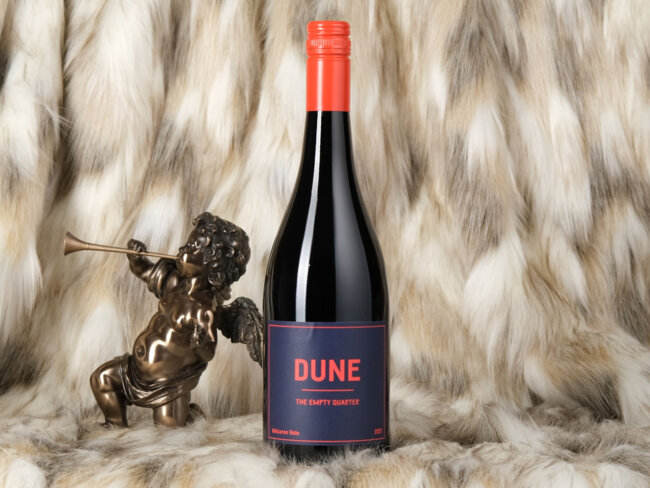
2025 Dune ‘Maspalomas’ Clarete
The Spanish tradition of making ‘clarete’ wines – red and white co-ferments that land somewhere between chilled reds, rosés, and skin-contact whites – has only recently come back from the brink of extinction. And Australia has already joined the party with this, our country’s first clarete – a quaffable, rose-scented delight of a wine that colours outside of the lines.
  • Producer

    Dune

  • Region

    McLaren Vale

  • RRP

    $32

  • Vintage

    2025

  • Variety/Varieties

    Grenache Grenache blanc

  • Alc./Vol.

    13%

Spain’s traditional ‘clarete’ wines might be pink in hue, but they are not rosés. The colour in rosé comes from taking red grapes and giving their skins only brief contact with the juice before whisking them away; the colour in clarete comes from mixing red and white grapes in the ferment, and giving both components equal amounts of skin-contact time. The resulting wines land at the centre of the Venn diagram of a lot of the current moment’s drinking trends – they look like rosé, drink like a chilled red, and have some of the texture of skin-contact whites. They were also practically extinct in Spain – made only for local consumption – until 2016, when Scott Wasley, an Australian importer of Spanish wine, collaborated with Rioja producer Alegre y Valgañón to reintroduce the style commercially. Not long afterwards, in 2022, brothers Duncan and Peter Lloyd made Australia’s first take on the style, ‘Maspalomas’, co-fermenting whole bunches of grenache with crushed grenache blanc from Blewitt Springs in McLaren Vale. This, the fourth vintage of ‘Maspalomas’, shows why they’re onto a winner with the style.


Tasting Note

Deep pink in the glass, with a slight tinge of burnt orange tone – pitched somewhere between ‘dark rosé’ and ‘ultra-light red’. The nose of this wine opens with delicate and slightly unusual aromatics – dried rose petals, freshly-grated mace, the high-toned boozy funk of kirschwasser. On the palate, the fruit character becomes clearer – juicy tart cranberries, crunchy pomegranate arils, the white tops of just-ripe strawberries. There’s an appealing vibrancy to the wine, despite the fact that it doesn’t have high acidity, with lightly grippy tannins (reminiscent of a good skin-contact white), a touch of phenolic bitterness, and a pop of salinity to keep everything fresh. The texture is juicy and generous, with glossy fruit that doesn’t veer into the realms of ‘overripe’ or ‘slick’. An interesting hint of watermelon rind character emerges on the finish – and draws you back for another sip. Serve lightly chilled.


Themes of this wine

McLaren Vale

While it couldn’t feel any more removed from city life, the McLaren Vale wine region is actually inside Adelaide’s metropolitan area. And although the township itself is only forty minutes by car from central Adelaide and vineyards brush up against ever-encroaching housing, McLaren Vale remains unaffected by the urban sprawl. With deeply etched history, the Vale has a slow-paced sense of calm and an extraordinary wealth of untrammelled beauty. It is home to some of this country’s most beautifully pristine beaches, as well as some of the world’s most forward-thinking grape-growers and winemakers. And with over eighty cellar doors, it is an essential destination for wine lovers – and anyone else, for that matter.


Grenache

The great variety of the Southern Rhône, grenache actually hails from Spain, where it’s called garnacha – but it has found many other homes around the world, from Italy to California. Australia has its own special relationship with the variety – we’re home to the world’s oldest productive grenache vines, planted in 1948. Today, a renaissance is seeing the variety championed, with makers in McLaren Vale arguably turning out the most compelling examples.


Grenache blanc

As its name suggests, grenache blanc is a colour mutation of grenache – the raspberry-scented red variety from Spain that is more famous in its Southern French guise. As with the dark-skinned original, grenache blanc likely originated in Spain, with the colour mutation probably occurring in the Terra Alta region of Catalunya, not far from Barcelona. While there isn’t much grenache blanc currently in the ground in Australia, it’s a variety that has attracted some attention as a climate-apt variety for warmer regions, particularly in South Australia, given its natural tolerance to both drought and heat. It produces rich, unctuous white wines that, while not overly high in acid, can age well if carefully made.


2025 Dune ‘Maspalomas’ Clarete

GET FIRST ACCESS TO THE NEXT WINE ICONS – DELIVERED

Find out more

Each month, get 3 bottles of our freshest discoveries. We taste thousands to bring you the best.

Join us and support emerging winemakers, sustainable vineyards, and the development of young professionals.

Find out more
“One of the highlights of my drinking year.”
— Max Allen, Wine Writer
“The future of wine in Australia.”
— Broadsheet
“The cutting edge of Australian wine.”
— The Australian
2024 Thistledown ‘Walking With Kings’ Roussanne / Grenache Blanc
What happens when you treat two ‘alternative’ varieties with the same amount of reverence other makers would reserve for the noble chardonnay? If you’re Thistledown’s Giles Cooke, you get a serious – and seriously delicious – textural white.
  • Producer

    Thistledown

  • Region

    McLaren Vale

  • RRP

    $60

  • Vintage

    2024

  • Variety/Varieties

    Grenache blanc Roussanne

  • Alc./Vol.

    13%

Australian wine drinkers are an adventurous bunch – thanks to the pioneering work of figures such as Max Allen, the Chalmers family, and the Australian Alternative Varieties Wine Show, we’re very happy to try emerging ‘alternative’ varieties. (This is a very good thing, too, as these varieties are likely be far better suited to many Australian wine-growing regions than the more familiar chardonnay, pinot noir, shiraz, et cetera.) Indeed, some of the ‘alternative’ varieties of yesteryear, such as pinot gris/grigio, are now mainstays in Australia – while relative newcomers fiano and tempranillo look set to storm the mainstream shortly. But one barrier persists – price. As a general rule, Australian wine drinkers aren’t willing to pay serious money for wines made from these varieties, instead preferring to hew to tried-and-true mainstream (or ‘noble’) varieties when looking for a statement bottle. Enter ‘Walking With Kings’, a blend of handpicked roussanne and grenache blanc from two separate McLaren Vale vineyards, each of which have been given the kind of luxe winemaking treatment normally reserved for chardonnay. It’s not a cheap wine, but  neither is it expensive, given the effort involved and quality produced – instead, it’s the kind of wine that can quietly reframe our expectations for ‘alternative’ varieties, and prove them every bit as ‘noble’ as their better-known counterparts.


Tasting Note

An intriguing nose – initially somewhat closed, but as it comes up in temperature and sees some oxygen it becomes redolent of lemon zest, almond meal, candied orange rind, orange blossom, honeysuckle, and tinned peaches and pears in their syrup. Fresh and lithe on the palate, brightened by zesty acidity, despite a syrupy texture that plays nicely with the tinned-fruit aromatic notes and a slightly waxy feel on the finish. The flavours on the palate skew a little more savoury than the nose would suggest, with some Parmesan rind–like lees influence showing in the middle palate and a sprinkling of sea salt–like minerality on the finish. It’s a wine of intriguing contrasts – rich yet light, fruity yet savoury, bright but not overtly acid-driven. Most importantly, it’s a wine that deftly straddles the line between ‘eminently drinkable’ and ‘thought-provoking’. 


Themes of this wine

McLaren Vale

While it couldn’t feel any more removed from city life, the McLaren Vale wine region is actually inside Adelaide’s metropolitan area. And although the township itself is only forty minutes by car from central Adelaide and vineyards brush up against ever-encroaching housing, McLaren Vale remains unaffected by the urban sprawl. With deeply etched history, the Vale has a slow-paced sense of calm and an extraordinary wealth of untrammelled beauty. It is home to some of this country’s most beautifully pristine beaches, as well as some of the world’s most forward-thinking grape-growers and winemakers. And with over eighty cellar doors, it is an essential destination for wine lovers – and anyone else, for that matter.


Roussanne

A white variety grown primarily in France’s Rhône Valley, roussanne partners with marsanne in the north for Crozes-Hermitage, Hermitage and Saint-Joseph, while it slips into Southern Rhône blends in lower concentrations, with grenache blanc taking more of a lead. Australia has very little of the variety planted, but the small amount that is grown has shown to make compelling wine, either as a varietal wine or blended with its familiar foils, marsanne and viognier.


Grenache blanc

As its name suggests, grenache blanc is a colour mutation of grenache – the raspberry-scented red variety from Spain that is more famous in its Southern French guise. As with the dark-skinned original, grenache blanc likely originated in Spain, with the colour mutation probably occurring in the Terra Alta region of Catalunya, not far from Barcelona. While there isn’t much grenache blanc currently in the ground in Australia, it’s a variety that has attracted some attention as a climate-apt variety for warmer regions, particularly in South Australia, given its natural tolerance to both drought and heat. It produces rich, unctuous white wines that, while not overly high in acid, can age well if carefully made.


2024 Thistledown ‘Walking With Kings’ Roussanne / Grenache Blanc

GET FIRST ACCESS TO THE NEXT WINE ICONS – DELIVERED

Find out more

Each month, get 3 bottles of our freshest discoveries. We taste thousands to bring you the best.

Join us and support emerging winemakers, sustainable vineyards, and the development of young professionals.

Find out more
“One of the highlights of my drinking year.”
— Max Allen, Wine Writer
“The future of wine in Australia.”
— Broadsheet
“The cutting edge of Australian wine.”
— The Australian
2024 Thistledown ‘Walking With Kings’ Roussanne / Grenache Blanc

The Next Wine Icons – Delivered

Each month, get 3 bottles of fresh discoveries.
We taste thousands to bring you the best.

Bookmark this job

Please sign in or create account as candidate to bookmark this job

Save this search

Please sign in or create account to save this search

create resume

Create Resume

Please sign in or create account as candidate to create a resume