2019 Place of Changing Winds Marsanne Heathcote

Read more
2019 Place of Changing Winds Marsanne
A textural, flavour-intense but light-footed wine, this is loaded with orchard fruits, smoky minerals and waxy notes.
  • Producer

    Place of Changing Winds

  • Region

    Heathcote

  • RRP

    $38

  • Vintage

    2019

  • Variety/Varieties

    Marsanne

  • Alc./Vol.

    13%

Place of Changing Winds’ Rhône-inspired Heathcote venture is anchored in syrah, but – even though it’s just the first release – marsanne is certainly not taking a backseat. A textural, flavour-intense but light-footed wine, this is loaded with orchard fruits, smoky minerals and waxy notes.

Tasting note

Golden in colour, the nose opens with ripe orchard fruits, rich golden apples, poached pears, roasted nuts, waxiness, honey and smoky mineral notes. This has a saline slip to the texture, with a generosity of flavour and texture that reads as neither big nor broad, just loaded with mouth-filling flavour and a silky gliding quality to the way it drinks, acidity a gentle but present guide.

Themes of this wine

Marsanne

A grape most commonly associated with the Northern Rhône, though it features in the south, marsanne has also carved a small be significant niche in Australian wine folklore. With vines planted in 1927, Victoria’s Tahbilk lays claim to some of the oldest, if not the oldest, marsanne vines in the world. And the wines have proved to age incredibly well, as they can in the Rhône. Flavours can range through pear, apple and citrus, with nutty and toasty development over time, as well as a varietally distinctive honeysuckle character.

Heathcote

Heathcote is rugged country, a tinder-dry landscape of rusty iron-rich soils littered with sculpturally stacked granitic boulders. It’s mythical territory, ancient land, and home to some of the world’s oldest viticultural soils. But as a wine region, it is a relatively young one, which saw an explosion of growth in the 90s. Shiraz led the charge, and it became Victoria’s answer to the Barossa or McLaren Vale, producing wines of significant power. But Heathcote is very different to both those places, and it is not that easily defined. Today, shiraz finds myriad expressions, and many other varieties are taking a firm grip, especially those suited to dry and warm climes.

2019 Place of Changing Winds Marsanne

GET FIRST ACCESS TO THE NEXT WINE ICONS – DELIVERED

Find out more

Each month, get 3 bottles of our freshest discoveries. We taste thousands to bring you the best.

Join us and support emerging winemakers, sustainable vineyards, and the development of young professionals.

Find out more
“One of the highlights of my drinking year.”
— Max Allen, Wine Writer
“The future of wine in Australia.”
— Broadsheet
“The cutting edge of Australian wine.”
— The Australian
2020 Chalmers ‘Dott’ Ribolla Gialla
Picked ultra-fresh, this rendition of the great Friulian grape is alive with citrus, apple and herb flavours borne along an electric rail of acidity.
  • Producer

  • Region

    Heathcote

  • RRP

    $28

  • Vintage

    2020

  • Variety/Varieties

    Ribolla gialla

  • Alc./Vol.

    11.5%

Chalmers’ Dott wines are built to challenge the idea that grapes traditionally grown in Italy’s generally cooler north can’t thrive in more arid climes, like Heathcote. Picked ultra-fresh, this rendition of the great Friulian grape is alive with citrus, apple and herb flavours borne along an electric rail of acidity.

Tasting note

With a noticeably pale greenish colour, this also registers at a low 11.5% alcohol. The nose is driven by cool flavours of cut herbs, hops, tart green apple, grapefruit, lime pith and chilled cucumber. The palate echoes the nose, with the wine sitting light and vibrant in the mouth, bustling along with vibrant citric acidity and a drying pucker, offering amply quenching refreshment value.

Themes of this wine

Ribolla Gialla

A grape native to Friuli in north-western Italy and bordering Slovenia, ribolla gialla is often used in blends, where is contributes citrus notes and plenty of acidity. It is also a grape that has commonly been used to make skin-contact wines, becoming something of a darling of the Italian natural wine movement.

Heathcote

Heathcote is rugged country, a tinder-dry landscape of rusty iron-rich soils littered with sculpturally stacked granitic boulders. It’s mythical territory, ancient land, and home to some of the world’s oldest viticultural soils. But as a wine region, it is a relatively young one, which saw an explosion of growth in the 90s. Shiraz led the charge, and it became Victoria’s answer to the Barossa or McLaren Vale, producing wines of significant power. But Heathcote is very different to both those places, and it is not that easily defined. Today, shiraz finds myriad expressions, and many other varieties are taking a firm grip, especially those suited to dry and warm climes.

2020 Chalmers ‘Dott’ Ribolla Gialla

GET FIRST ACCESS TO THE NEXT WINE ICONS – DELIVERED

Find out more

Each month, get 3 bottles of our freshest discoveries. We taste thousands to bring you the best.

Join us and support emerging winemakers, sustainable vineyards, and the development of young professionals.

Find out more
“One of the highlights of my drinking year.”
— Max Allen, Wine Writer
“The future of wine in Australia.”
— Broadsheet
“The cutting edge of Australian wine.”
— The Australian
2019 Place of Changing Winds Syrah
This is bursting with spice and wild fruits, with an underlying signature of regional minerality.
  • Producer

    Place of Changing Winds

  • Region

    Heathcote

  • RRP

    $44

  • Vintage

    2019

  • Variety/Varieties

    Shiraz (Syrah)

  • Alc./Vol.

    13%

While the home site in Macedon is a ground-breaking ultra-close-planted vineyard, Place of Changing Winds’ Rob Walters has been making Heathcote syrah for over a decade, emphasising the fragrant, spicy side of the grape, as well as Heathcote’s under-explored potential for elegance. From an organic vineyard in the Mount Camel Range, this is bursting with spice and wild fruits, with an underlying signature of regional minerality.

Tasting note

Made with 100 per cent whole bunches, this has ample spice and savoury complexity, but it’s not stalky as such, rather it lends the intense fruit and regional notes of cracked earth an engaging counterpoint, with meaty, smoky detail, a rusty ferrous note and black tea against red and black berries, dark plum and smashed cherries. This sits midweight, bright and vibrant but complex and layered, with it neither fruity or overtly savoury, oak is not an apparent factor, with pithy grapey tannins directing the wine savoury and long.

Themes of this wine

Syrah/shiraz

Shiraz dominates the Australian wine industry, accounting for nearly a third of this country’s vines. The grape’s traditional home is in France’s Northern Rhône, with wines that combine elegance and power, while Australia is perhaps best known for the muscular styles from warmer areas. Today, drinkers of Australian shiraz are spoilt for choice with expressions ranging from the elegant and spicy to the monumental.

Heathcote

Heathcote is rugged country, a tinder-dry landscape of rusty iron-rich soils littered with sculpturally stacked granitic boulders. It’s mythical territory, ancient land, and home to some of the world’s oldest viticultural soils. But as a wine region, it is a relatively young one, which saw an explosion of growth in the 90s. Shiraz led the charge, and it became Victoria’s answer to the Barossa or McLaren Vale, producing wines of significant power. But Heathcote is very different to both those places, and it is not that easily defined. Today, shiraz finds myriad expressions, and many other varieties are taking a firm grip, especially those suited to dry and warm climes.

Whole bunch

Before grapes are fermented, they are often de-stemmed, but they can also be left as whole bunches. Some winemakers will include a small or large portion in their ferments, with the rest destemmed, or less commonly they will leave all bunches intact. The impact of fermenting with whole bunches will create slightly different flavour profiles than if destemmed, with the grape stalks adding spice notes, and sometimes a green stemmy character, while also bringing in more tannin, and tannin with a different feel and texture to grape skin/seed or oak tannin. And while these added characters are quite savoury, the grapes in a ferment like this often remain whole for longer, meaning they start fermenting inside the berries first, which can bring a very bright fruit profile to the flavour mix. Any grape variety can be fermented with whole bunches, even white ones, but the technique is most associated with pinot noir, shiraz, gamay and grenache.

2019 Place of Changing Winds Syrah

GET FIRST ACCESS TO THE NEXT WINE ICONS – DELIVERED

Find out more

Each month, get 3 bottles of our freshest discoveries. We taste thousands to bring you the best.

Join us and support emerging winemakers, sustainable vineyards, and the development of young professionals.

Find out more
“One of the highlights of my drinking year.”
— Max Allen, Wine Writer
“The future of wine in Australia.”
— Broadsheet
“The cutting edge of Australian wine.”
— The Australian
2018 Chalmers ‘Dott.’ Schioppettino
A riot of spice, wild berries and floral notes on a slippery but taut midweight frame.
  • Producer

    Chalmers

  • Region

    Heathcote

  • RRP

    $28

  • Vintage

    2018

  • Variety/Varieties

    Schioppettino

  • Alc./Vol.

    14%

An Italian variety that you’ve never heard of? It’s got to be a Chalmers wine. And it’s another brilliant drink crafted by Bart van Olphen, a riot of spice, wild berries and floral notes on a slippery but taut midweight frame.

Tasting note

This is a fascinating tangle of dark wild berries – some quite ripe, some on the sour side – and a brush of soft herbs and dusky florals, with a dusting of brown spice, white pepper, coffee grounds and amaro herbs, touching on liquorice. The palate dips into preserved cherries, with those layers of spice and herby things adding plenty of detail, the wine carrying in a sinewy way, tannins and acidity wound into a viscous texture that is mouth coating but tightly arranged.

Themes of this wine

Schioppettino

A relatively rare grape even in its native Friuli, Italy, schioppettino has been slowly pulled back from the brink of extinction after a low point in the middle of the 20th century. Today, there are some 150 hectares in Italy, ensuring its survival but hardly making it a household name. It is characterised by peppery aromatics, mixed with red fruits and red and blue floral notes. Generally midweight, schioppettino can be nonetheless quite fruit intense while holding bright acidity.

Heathcote

Heathcote is rugged country, a tinder-dry landscape of rusty iron-rich soils littered with sculpturally stacked granitic boulders. It’s mythical territory, ancient land, and home to some of the world’s oldest viticultural soils. But as a wine region, it is a relatively young one, which saw an explosion of growth in the 90s. Shiraz led the charge, and it became Victoria’s answer to the Barossa or McLaren Vale, producing wines of significant power. But Heathcote is very different to both those places, and it is not that easily defined. Today, shiraz finds myriad expressions, and many other varieties are taking a firm grip, especially those suited to dry and warm climes.

2018 Chalmers ‘Dott.’ Schioppettino

GET FIRST ACCESS TO THE NEXT WINE ICONS – DELIVERED

Find out more

Each month, get 3 bottles of our freshest discoveries. We taste thousands to bring you the best.

Join us and support emerging winemakers, sustainable vineyards, and the development of young professionals.

Find out more
“One of the highlights of my drinking year.”
— Max Allen, Wine Writer
“The future of wine in Australia.”
— Broadsheet
“The cutting edge of Australian wine.”
— The Australian
Jean-Paul Trijsburg farms a small pinot noir vineyard in the Ballarat region for his Jean-Paul label, while also sourcing fruit from across central Victorian vineyards, making diverse styles, from vermouth, to red pÊt-nats, to a carmÊnère and a more classic offering of pinot noir and cool climate syrah. Year on year, the range has expanded, with even more cuvÊes planned for the 2023 vintage.
  • Producer

  • Region

    Heathcote

  • RRP

    $

  • Vintage

  • Variety/Varieties

  • Alc./Vol.

    %

Jean-Paul Trijsburg farms a small pinot noir vineyard in the Ballarat region for his Jean-Paul label, while also sourcing fruit from across central Victorian vineyards, making diverse styles, from vermouth, to red pÊt-nats, to a carmÊnère and a more classic offering of pinot noir and cool climate syrah. Year on year, the range has expanded, with even more cuvÊes planned for the 2023 vintage.

“This vintage is looking amazing,” says Trijsburg. “It’s a cool year and we’ll be late with most of the picking. That makes it very suitable for making elegant, lighter wines. Lately, I have found myself longing for lighter reds, so it will be good to make more of these. This vintage I am playing with a blend of pinot noir and pinot gris, aiming for a light and flavoursome red. I am excited about that. I am also making a Rhône blend with whole bunch grenache, carbonic shiraz and a splash of viognier.”

Although the range may be growing, Trijsburg stresses that his label is about simplicity. “It’s about affordable quality that is unique but accessible. I want people to feel comfortable with my wines. It’s my way of expressing myself and sharing what I’ve learned from my experiences in some of the world’s most amazing wine regions. I enjoy showcasing grapes and regions that people might not have heard of, and seeing people embrace new things.”

This idea of stretching people’s boundaries, including his own, is something that Trijsburg believes in strongly, but the approach is always a fun one, with pleasure rather than overt seriousness in mind. “I made this red pét-nat, a mistelle [grape juice fortified with spirit], two vermouths… I want my business to be fun, too. I don’t want to grow to employ staff and take on warehouses. I want to stay small and be independent to create honest, simple wines, and enjoy the process.”

That philosophy very much extends to the way he sells his wine, including at farmer’s markets. “I enjoy the market community. I’m still selling direct to restaurants, wine shops and wine bars – and though my distribution has grown, I still like to drop off wine orders myself every so often to chat to the owners and see how they’re going. And I’m still chatting on the phone all the time to other winemakers, swapping stories and sharing the load where we can. There are a lot of good people in this industry.”

“When I think of grape varieties and wine styles, I have this mental map of France in my head. From cool climate pinot in Burgundy (Ballarat), to continental Alsace (Mount Alexander), great for pinot gris and riesling, and warm and dry Rhône and Languedoc (Heathcote) for shiraz and carménère. The climate needs to fit the grapes and wine style. I feel really lucky to be in an area where I have access to such diverse climates and terroirs within a 150-km radius.”

Trijsburg studied agronomy in The Netherlands, but an already burgeoning interest in wine saw him take on a post-graduation job in 2007 at a vineyard in Nuits-St-George, Burgundy. That role, originally to pick grapes, saw him spend most of his time in the winery, steering him towards a career as a winemaker. “I loved how wine is one of the few products where you can be involved in growing, making, marketing and selling a product. You get the full lifecycle.”

He subsequently completed his Master of Science of Viticulture and Oenology through VINIFERA, studying in Montpellier and Bordeaux, France, and Geisenheim, Germany. Trijsburg says that variety of locations exposed him to many different styles, which encouraged him to work vintages in Germany, Spain, Chile and South Africa, before taking on a winemaking role for a small winery in The Netherlands. He settled in Australia in 2012, working both for Lethbridge, Geelong, and Hanging Rock Winery in the Macedon Ranges.

“I’ve always loved to grow things, to care for the earth and create life,” says Trijsburg. “I was about five years old when I told my parents I wanted to become a farmer. I started a veggie patch when I was six, and I’ve had one ever since. I love the simplicity of growing plants, the challenge of producing higher quality crops from healthier vineyards, using less water, having a positive impact on our environment. I’ve been fortunate as a winemaker to travel the world doing just that.”

The first wine Trijsburg made under his own Jean-Paul label was a carménère – an old Bordeaux variety that was thought nearly extinct until most of Chile’s merlot was revealed to be carménère instead, and it is barely grown anywhere else – which was released in 2017.

“I love the simplicity of growing plants, the challenge of producing higher quality crops from healthier vineyards, using less water, having a positive impact on our environment. I’ve been fortunate as a winemaker to travel the world doing just that.”

In 2018, he took on the management of the White Swan Vineyard, a 30-year-old pinot noir site near his home base of Ballarat. “It hadn’t been pruned for a few years and wasn’t in great shape,” he says. “The vineyard has a gentle northern slope and is surrounded by state forest – it’s a beautiful spot, owned by a local restaurateur. That first harvest yielded just a tonne. I have built it up over the past few seasons, using seaweed extract, minimal irrigation and mainly organic sprays. I like working with my hands – to know that it’s my hard work that’s contributed to the quality and yield. I invest myself in the vineyard.”

Starting out by making the wines in the garage at home, an accident that saw a bin of grapes spilt down the steep driveway saw operations moved to Hanging Rock Winery, where he still makes the wines. “I’ve been fortunate to encounter great mentors in many places – each teaching me more about low intervention, simple, clean, beautiful wines – and, importantly, the vineyards that create them. I bounce ideas around with Rob Ellis, Hanging Rock’s head winemaker. Rob’s a great help with ideas, blending and advice. And I have introduced him to a few things, too.”

All Trijsburg’s reds are unfiltered and un-fined, with minimal sulphur additions, while the whites are un-fined, and only filtered when needed. All whites have a percentage fermented or aged in used barriques, as he favours the complexity it adds, and the way it rounds the wines.

The range is always fluid, with the path wines take depending on the site and the season. Currently fruit is sourced from several different regions, including Ballarat, Mount Alexander in Bendigo, Strathbogie and Heathcote. “I’ll always be trying new grape varieties and wine styles. I will keep on making experimental and interesting wines, just because I enjoy it. I’ve got my eye on some French and Italian varieties, such as greco, roussanne, piquepoul, gamay, sangiovese and trebbiano. There are some really interesting plantings happening in Heathcote and I will be focusing more on this region.”

Trijsburg notes that when he thinks of grape varieties and wine styles, he has this mental map in his head. “From cool climate pinot in Burgundy (Ballarat), to continental Alsace (Mount Alexander), great for pinot gris and riesling, and warm and dry Rhône and Languedoc (Heathcote) for shiraz and carménère. The climate needs to fit the grapes and wine style. I feel really lucky to be in an area where I have access to such diverse climates and terroirs within a 150-km radius.”

His vermouth project has deepened, too. “We bought a beautiful property that has some amazing old trees, including a massive quince tree, a 50-year-old hawthorn and a 100-year-old crabapple. It has the space to plant more fruit trees, such as sloe and damson plums, six varieties of wormwood and lots more botanicals, all of which I intend to use in the next vermouth recipes. The vermouths have been a passion project of mine combining my love for gardening and my profession of winemaking.”

Jean-Paul Trijsburg

GET FIRST ACCESS TO THE NEXT WINE ICONS – DELIVERED

Find out more

Each month, get 3 bottles of our freshest discoveries. We taste thousands to bring you the best.

Join us and support emerging winemakers, sustainable vineyards, and the development of young professionals.

Find out more
“One of the highlights of my drinking year.”
— Max Allen, Wine Writer
“The future of wine in Australia.”
— Broadsheet
“The cutting edge of Australian wine.”
— The Australian
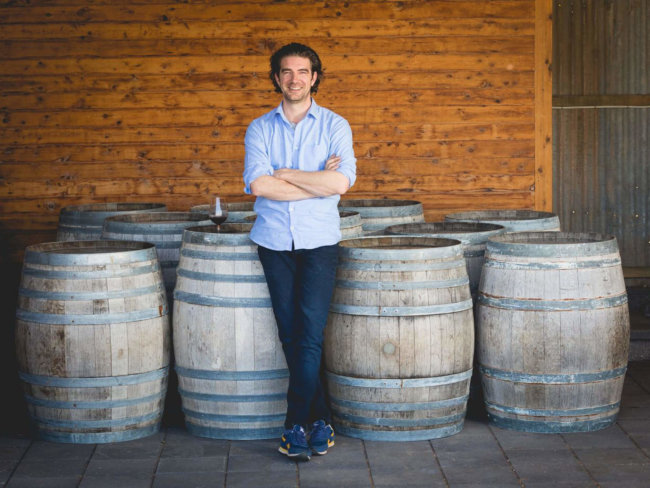
Stuart Dudine’s Alkimi Wines is built around his passion for both the Yarra Valley and Rhône varieties, with marsanne and syrah at the core alongside chardonnay, pinot noir, grenache, sparkling and rosé. The wines are pitched consistently toward the elegant end of the spectrum – natural yeast, no additions except sulphur, unfined and mostly unfiltered, with a No Additions range where not even sulphur is used. Now working from a dedicated leased space in the Yarra Valley and selling direct to wholesale accounts across Victoria, Alkimi is entering a more settled and focused phase after a decade of building the foundations.
  • Producer

  • Region

    Heathcote Victoria Yarra Valley

  • RRP

    $

  • Vintage

  • Variety/Varieties

  • Alc./Vol.

    %

Stuart Dudine’s Alkimi Wines is built around his passion for both the Yarra Valley and Rhône varieties, with marsanne and syrah at the core alongside chardonnay, pinot noir, grenache, sparkling and rosé. The wines are pitched consistently toward the elegant end of the spectrum – natural yeast, no additions except sulphur, unfined and mostly unfiltered, with a No Additions range where not even sulphur is used. Now working from a dedicated leased space in the Yarra Valley and selling direct to wholesale accounts across Victoria, Alkimi is entering a more settled and focused phase after a decade of building the foundations.

Dudine graduated with a wine science degree from Charles Sturt University and has completed more than 20 vintages, including four in Europe – two in France, one in Italy, one in Austria. His first vintage came in 2006, and the shape of Alkimi began to form after a formative stint in Côte-Rôtie in 2013. “After coming back from the 2013 vintage in Côte-Rôtie, I began to believe I had what it took to put it all together,” he says. “It is harder than I ever imagined, but fun to be doing it.” The first Alkimi wines were made from the 2014 vintage, just months after returning from France. “My main vision is to feature high-quality wines from Rhône Valley varieties in the Yarra Valley,” he says. “Diversifying grape plantings in certain warmer parts of the Yarra Valley ensures the region stays relevant and progressive in an ever-changing climate.”

“My wines tend to not be as polished as some wines out there. So, while they are familiar, they have a few extra edges to them.”

The Rhône thread runs through everything, but the Yarra classics hold their own. Syrah and marsanne sit alongside chardonnay and pinot noir in the core range – the latter two benefiting from the cool Yarra climate that Dudine regards as “close to perfect” for both varieties. A grenache from Cambrian soils in Heathcote adds a further dimension. Across all of it, the winemaking remains technologically simple. “I prefer to sculpt wines using the magic of great sites, good picking decisions and very diligent winemaking,” he says. The No Additions range takes that restraint to its logical conclusion: not a drop of sulphur, not an additional input of any kind. All wines are un-fined, naturally stabilised and mostly unfiltered.

Growing Rhône varieties in the Yarra is not without its challenges. “If the season is on the cold side, the grapes have to hang for longer, which poses a risk for disease and low ripeness,” Dudine says. “If diligent vineyard management is not practiced, it will be a disaster. I have found best practice is to always be one step ahead of what the vineyard and the weather is doing to prevent any potential issues. I have learnt over the years to adapt my wines, wine styles and ambitions on the spot to make the best of any situation.” He regards himself as something of a risk-taker in winemaking – “calculated risks in pursuit of making better wine – some things work, some things don’t. I think due to some winemaking techniques, my wines tend to not be as polished as some wines out there. So, while they are familiar, they have a few extra edges to them.” Those edges, deliberately kept.

The vineyard work is where Dudine’s evolution has been most pronounced. He has now been farming small plots in the Yarra Valley for nine years, and two of those plots share a similar story: vineyards on the brink of being pulled out, rescued by Dudine and progressively restored. The first was a small syrah block in the Yarra – reworked vine by vine, farmed organically, now producing fruit with the potential to become a genuinely compelling single-vineyard red. “It was on the brink of being pulled out,” he says. “I have reworked every vine and I follow a number of organic practices, which means the ecology of the vineyard both below and above the ground is always improving.” The Wattle Grove Vineyard – home to the 30-plus-year-old unirrigated marsanne vines that produce the current flagship white – was the more recent restoration, with the main work focused below the ground. Organic farming practices have been introduced, soft pruning techniques based on the Poussard method – designed to maintain healthy sap flow and reduce large wounds that can introduce disease – have been adopted, and regenerative agriculture principles now frame every decision. “I have been adopting soft pruning techniques and have spent recent years learning about and living by regenerative farming,” he says. “That is to make the land and environment healthy and resilient indefinitely.” He also invites other growers and viticulturists to visit and exchange ideas. “I visit other vineyards and chat techniques with the growers, and I also invite people to visit my vineyard too.”

In 2025, two significant milestones shifted the business into a new phase. The lease of a dedicated factory space in the Yarra Valley gave Alkimi a permanent home for the first time – a place to make wine, store it, and host guests. “Having an official base for my business is a solid step forward,” says Dudine. And taking wholesale distribution back in-house across Victoria brought him face-to-face with buyers and customers in a way that has clarified both direction and relationships. “It’s been challenging yet very fulfilling,” he says. “Working directly with wholesale customers has given me new perspectives and helped solidify the direction I’m on.” That direction is increasingly focused: chardonnay, pinot noir, marsanne, sparkling and rosé as the core, with extended élevage – longer barrel ageing to build deeper, more complex characters in the wine – as the current preoccupation in the winery. An experimental freeze distillation project – freezing juice to remove ice, concentrating what remains into a potential dessert wine or something else entirely – continues quietly alongside the core work. Sparkling wine is back in production too, after a hiatus since 2022. “It is very exciting and I very much enjoy the whole process of making sparkling, especially considering the process is very hands on!”

The longer-term vision remains vivid. Regenerative farming on his own property. A cellar door and bar somewhere in the Yarra Valley for the tourists who already flock to the region. Export to the UK, the US and Europe. “Championing Rhône varieties in a changing climate,” as he puts it. One step at a time, but always with the destination in view.

Stuart Dudine

GET FIRST ACCESS TO THE NEXT WINE ICONS – DELIVERED

Find out more

Each month, get 3 bottles of our freshest discoveries. We taste thousands to bring you the best.

Join us and support emerging winemakers, sustainable vineyards, and the development of young professionals.

Find out more
“One of the highlights of my drinking year.”
— Max Allen, Wine Writer
“The future of wine in Australia.”
— Broadsheet
“The cutting edge of Australian wine.”
— The Australian
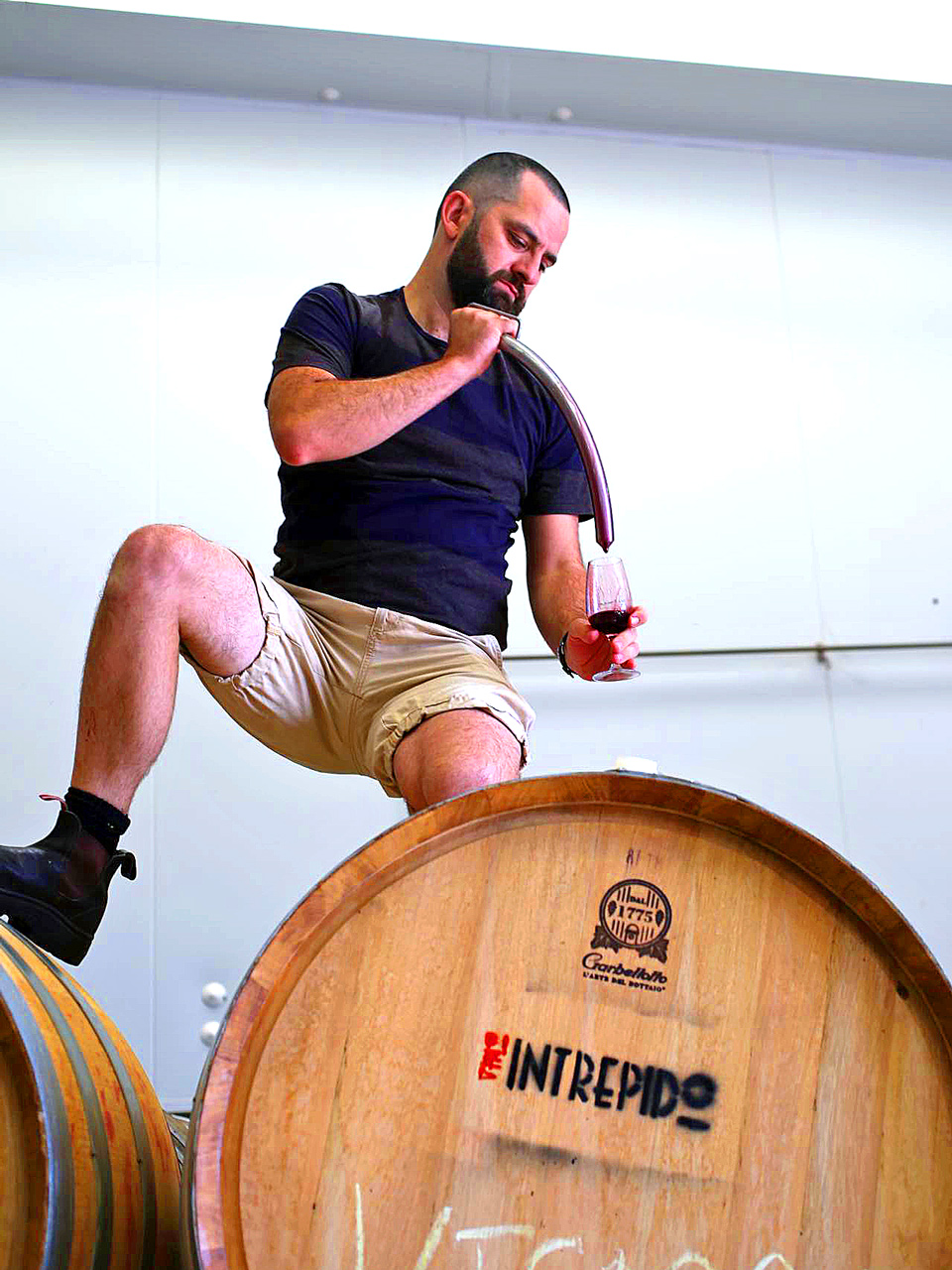
Vino Intrepido is a natural continuation for James Scarcebrook's long-term connection with Italian wine, from fine-wine retail and extensive wine-focused travel to wholesaling some of Italy's best wines. His range, which was launched in 2016 with two wines, has grown to include a suite of Italian varieties — sangiovese, nebbiolo, fiano, nero d'avola, greco, negroamaro and montepulciano among them. The grapes are all sourced from Victorian vineyards, then made in a way that takes inspiration from traditional Italian methods but is carefully tuned to be sympathetic to the natural expression of individual sites and seasons.
  • Producer

  • Region

    Heathcote Mornington Peninsula

  • RRP

    $

  • Vintage

  • Variety/Varieties

  • Alc./Vol.

    %

Vino Intrepido is a natural continuation for James Scarcebrook’s long-term connection with Italian wine, from fine-wine retail and extensive wine-focused travel to wholesaling some of Italy’s best wines. His range, which was launched in 2016 with two wines, has grown to include a suite of Italian varieties – sangiovese, nebbiolo, fiano, nero d’avola, greco, negroamaro and montepulciano among them. The grapes are all sourced from Victorian vineyards, then made in a way that takes inspiration from traditional Italian methods but is carefully tuned to be sympathetic to the natural expression of individual sites and seasons.

Scarcebrook started his career in wine with a job in liquor retail in 2004, with cellar door duty following at the Yarra Valley’s Domaine Chandon. After graduating as a Master of Wine Business from the University of Adelaide – and a stint as wine buyer at King & Godfree – he set off on a 16-month global wine tour, visiting wineries in ten countries, including working vintage at two wineries in Germany in 2012. Once home, Scarcebrook started his Vincast podcast series, while also working for two leading Sydney-based importers of Italian wine as their Melbourne representative for nearly seven years. In 2016, the first Vino Intrepido wines were launched, but it was in 2019 that Scarcebrook went all in, rebooting the label and expanding the range. When the pandemic prompted redundancy in 2020, he took the business full-time.

“For me, it is vital that the right varieties are selected from the right source. I do not necessarily want to make wine from an Italian variety because I can, I want to find a correlation with a local region and a region in Italy, to attempt to show the variety at its full potential.”

His formation has been shaped as much by travels in Italy as by local pioneers who showed what Italian varieties could do in Victoria. He cites Mark Walpole, Mario Marson and Kathleen Quealy as significant influences – makers who demonstrated the potential for these varieties in Victorian conditions long before the conversation became mainstream. “For me, it is vital that the right varieties are selected from the right source,” he says. “I do not necessarily want to make wine from an Italian variety because I can – I want to find a correlation with a local region and a region in Italy, to attempt to show the variety at its full potential. I’m attempting to capture the best drinkable elements of Italian wine through the prism of Victorian vineyards and climates, working in a simple and honest way to express grape and origin.”

Scarcebrook works in consultation with Mark Matthews at The Wine Creche, a collaborative winemaking facility that gives him access to experienced guidance alongside the creative freedom to realise his own ideas. “For the most part, I am testing theories I have developed,” he says. “And, for the most part, I have been incredibly lucky to make wines that are close to my intention. I have learned the hard way about working with the grower and the fruit, rather than stubbornly sticking to the original plan and trying to get something out of grapes that are not suited for a style.” His sparkling wines are produced in conjunction with sparkling wine specialists Kilchurn in Romsey.

“Italian varieties’ ability to often ripen later and retain acidity helps keep the wines flavourful and fresh. I also select varieties that reach flavour ripeness at lower sugar levels, to keep alcohol levels at a balanced place. Picking at the right time and not fucking it up in the winery is how I try to work.”

Climate change has been a significant driver of his variety selections. “Italian varieties’ ability to often ripen later and retain acidity helps keep the wines flavourful and fresh,” he says. “I also select varieties that reach flavour ripeness at lower sugar levels, to keep alcohol levels at a balanced place. Picking at the right time and not fucking it up in the winery is how I try to work.” That approach in the winery sees traditional methods employed, with Scarcebrook noting he takes inspiration from classic Italian practices but always with the fruit profile of the site prioritised. “Most wines are made with spontaneous fermentation and without fining or filtration. Sulphur is added minimally and when necessary, reacting rather than prescribing. No cold soaking is performed, but in some cases post-ferment maceration is used – sangiovese spends a month on skins, whereas nebbiolo spends at least eight weeks on skins. Mature and/or large-format wood is preferred.”

Patience is one of Scarcebrook’s biggest lessons, particularly with Italian varieties. “This applies to the way they hold their acidity as they reach flavour ripeness on the vine, the way they can sometimes go into slightly funky stages when fermenting, and particularly once they are in bottle,” he says. “This is particularly the case with the Mornington Peninsula fiano, which can really shut down at particular stages – but give it time and it absolutely sings.”

After several vintages embracing new varieties, new vineyards and new styles, Scarcebrook has recently pulled things back, focusing on fewer wines and key vineyards. The 2024 vintage brought greco and negroamaro into the range for the first time, alongside new styles including the Frigo montepulciano – a chilled red that has become his biggest selling wine – and a Novello sangiovese. The vision from here is consolidation rather than expansion. “After ten vintages I’m getting a better idea about what works best, and more importantly what the consumers are enjoying the most,” he says. “Keeping things uncomplicated makes my life easier, and ultimately makes for more accessible delicious wines.” The focus in 2026 is squarely on getting out and promoting the brand and selling the wines already made – with only the Frigo montepulciano in production this vintage. Ten vintages in, the direction is clearer than ever.

James Scarcebrook

GET FIRST ACCESS TO THE NEXT WINE ICONS – DELIVERED

Find out more

Each month, get 3 bottles of our freshest discoveries. We taste thousands to bring you the best.

Join us and support emerging winemakers, sustainable vineyards, and the development of young professionals.

Find out more
“One of the highlights of my drinking year.”
— Max Allen, Wine Writer
“The future of wine in Australia.”
— Broadsheet
“The cutting edge of Australian wine.”
— The Australian
2020 Maison Lapalus ‘Upwelling’ Mourvèdre
Light and bright, this is a pure riot of berries and grapey scents, with a fine freshness and gentle spritz – take it as it comes, or chill it down.
  • Producer

    Maison Lapalus

  • Region

    Heathcote

  • RRP

    $30

  • Vintage

    2020

  • Variety/Varieties

    Mourvèdre

  • Alc./Vol.

    12%

A wine created by Gilles Lapalus for an exhibition by Cameron Robbins, with the fermenting wine displayed at his Upwelling show in March 2020. Once fully fermented in Harcourt in demijohn, the wine was bottled and labelled with a drawing that was activated by its own fermentation. Picked early, this is a pure riot of berries and grapey scents, with a fine freshness and gentle spritz – take it as it comes, or chill it down.

Tasting note

A brambly lift of wild fruits, poised and vibrantly fresh, with forest berries and black cherries mingling with freshly turned earth and intensely grapey scents. This is pretty, lifted and just mid-weight, but ripeness of flavour has been perfectly snatched, with the wine constantly reminding you of the bright grape juice it was made from, but feeling every bit complete as a wine, too. There’s clear seam of gentle CO2 that gives it further brightness and lift, filling in for structure where tannin might normally sit. This would take a chill happily, but it doesn’t necessarily need it.

Themes of this wine

Heathcote

Heathcote is rugged country, a tinder-dry landscape of rusty iron-rich soils littered with sculpturally stacked granitic boulders. It’s mythical territory, ancient land, and home to some of the world’s oldest viticultural soils. But as a wine region, it is a relatively young one, which saw an explosion of growth in the 90s. Shiraz led the charge, and it became Victoria’s answer to the Barossa or McLaren Vale, producing wines of significant power. But Heathcote is very different to both those places, and it is not that easily defined. Today, shiraz finds myriad expressions, and other many other varieties are taking a firm grip, especially those suited to dry and warm climes.

Mourvèdre

Mourvèdre – or Mataro if you’re from South Australia – is a grape that is typically blended, usually with grenache and shiraz. Bottled solo, it often makes dark-fruited wines with gruffly earthy/herbal notes and plenty of tannin, but it makes some of the world’s best rosés, too.

2020 Maison Lapalus ‘Upwelling’ Mourvèdre

GET FIRST ACCESS TO THE NEXT WINE ICONS – DELIVERED

Find out more

Each month, get 3 bottles of our freshest discoveries. We taste thousands to bring you the best.

Join us and support emerging winemakers, sustainable vineyards, and the development of young professionals.

Find out more
“One of the highlights of my drinking year.”
— Max Allen, Wine Writer
“The future of wine in Australia.”
— Broadsheet
“The cutting edge of Australian wine.”
— The Australian
2020 Maison Lapalus ‘Upwelling’ Mourvèdre

The Next Wine Icons – Delivered

Each month, get 3 bottles of fresh discoveries.
We taste thousands to bring you the best.

Bookmark this job

Please sign in or create account as candidate to bookmark this job

Save this search

Please sign in or create account to save this search

create resume

Create Resume

Please sign in or create account as candidate to create a resume