&noscript=1"/>

Peter Valeri Via Pola Wines

Read more
  • Peter Valeri

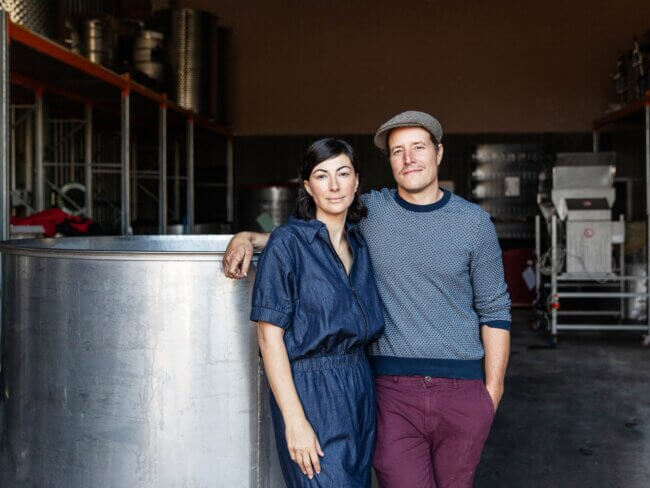
    New South Wales’s Riverina region cops a bit of a bad rap from wine lovers. The second-largest wine region in Australia in terms of volume, its 17,000 hectares under vine pump out 15% of the country’s wine grapes every year, nearly all of which get turned into mass-market wines such as the infamous Yellow Tail. With the exception of a handful of quality-minded producers such as R. Paulazzo, and some innovative projects from larger-scale growers like Calabria Family Wines (who are experimenting with Mediterranean varieties better suited to the region’s climate) and De Bortoli (whose famous Noble One botrytis wine comes from Riverina fruit), the region is generally seen as a wasteland in terms of fine wine. It’s a perception that Peter Valeri’s Via Pola project is trying its utmost to rewrite. With just two wines under its belt – a fiano and a montepulciano, both of which made their debut in vintage 2024 – it has already established itself as one of the most exciting new projects from the region in decades.

  • Paul Thomas

    Starting a new wine project in a region as storied as the Barossa Valley means taking a position in relation to its traditions. For most winemakers, the choice is between tearing up the region’s rulebook and scandalising the traditionalists – as a cohort of young vignerons did in the Barossa roughly a decade ago – or leaning in to the region’s reputation. But there is a third way: honouring history and tradition, while respectfully updating the elements that no longer resonate with the general public. It’s a tough needle to thread, but Paul Thomas’s Barossa project Tribus does so with aplomb. Thomas crafts a tight lineup of approachable wines from Barossa stalwarts shiraz, grenache, and mataro, with a little cabernet sauvignon and cabernet franc thrown in for good measure, alongside a riesling from the Watervale subregion of the nearby Clare Valley.

  • Ansel Ashby

    Everyone loves a comeback story, and with Pare Wine, Ansel Ashby is proving himself to be the Rocky Balboa of the South Australian wine scene. After having to shutter his first label, Gatch Wines, Ashby has returned with Pare – a new label in collaboration with wine merchant Andrew Williams. As the name suggests, Pare’s approach is all about minimalism, with their first release consisting of a compact collection of three single-site wines – two grenaches and a chardonnay –drawn from Adelaide Hills and McLaren Vale. Winemaking is minimal-intervention, allowing the fruit and terroir to speak clearly. With Pare, Ashby is proving that less is definitely more.

  • Owen Latta

    Many winemakers who come from wine families have racked up a little winemaking experience before they’re legally allowed to have a drink – but very few have been responsible for a whole vintage before they’ve turned 16. Owen Latta can claim this distinction due to an unfortunate workplace accident in his family winery, Eastern Peake, but he’s since taken to the role with gusto. Now back in charge of production at Eastern Peake, where he crafts a tight range of pinot noir and chardonnay-based wines, and with his own negociant label, Latta Vino, to play with more experimental techniques and off-the-beaten-path varieties, Owen’s winemaking effortlessly straddles generational divides and the traditional/natural dichotomy, proving him a force to be reckoned with.

  • Mitchell Sokolin

    Stop me if you’ve heard this one before: an American sommelier and French intellectual Gilles Deleuze walk into a natural wine bar … Sommelier-turned-winemaker Mitchell Sokolin channels his formidable intellect and love of silly puns into his Eleven Sons label. Using fruit sourced from various vineyards across South Australia’s broader Limestone Cost region – with some Pyrenees touriga nacional thrown in the mix, too – Sokolin crafts a tight lineup of wines based on chardonnay, semillon, pinot noir, pinot gris, and syrah, with a grüner veltliner on the way, plus a savagnin for his collaborative label with Shane Michael, Limestone Cowboy. Made using methods from “the natural playbook”, as he puts it – spontaneous ferments, no additions beyond a touch of sulphur at bottling, no new oak – with a cheerful disregard for traditional approaches to any given variety, the Eleven Sons range is as thought-provoking as it is drinkable.

  • Matthew Large

    It takes some stones to leave a gig like senior winemaker at a company as renowned as Shaw + Smith, but that’s just what Matt Large did towards the end of 2024 in order to focus fully on what had until then been his side-project, Praeter. What started as a small side-hustle in 2018 to explore Large’s love of Nebbiolo has now blossomed into a full-time proposition, with Large jetting between Austraia and Italy to produce a bijou collection of wines – two single-site nebbiolos, another fortified and aromatised nebbiolo, an Italian red blend, and a pecorino, with a further single-site nebbiolo set for release later this year. Large has also taken on the management of two blocks of vines in the Adelaide Hills – pinot noir and chardonnay – which will become part of the Praeter stable with the 2025 vintage. Drawing on a wealth of international experience, Large makes wines that show his ability to subtly interpret the diverse terroirs of the Adelaide Hills, the Pyrenees, and Italy’s Langhe region.

  • Marcell Kustos

    Sometimes it takes an outsider’s perspective to help articulate what makes something special – and Marcell Kustos of Lvdo Wines (pronounced ‘ludo’) has more than enough fresh angles from which to approach the subject of Australian wine. Born in Hungary to a family of viticulturists and winemakers, his formal education is in food technology and wine science, and his professional background is as a sommelier and wine director at some of Australia’s most lauded fine dining destinations (including Restaurant Botanic and Penfolds Magill Estate). He brings these perspectives to bear in the making of his Lvdo Wines label – a collection of four core wines (white, red, rosé and orange/amber) and some one-off project wines that pay homage to the great wines of Australia, with an outsider’s twist. Equally at home analysing Brix levels in must as he is selling his wines to the restaurant trade, Lvdo Wines demonstrates that Kustos is an unlikely renaissance man with new and interesting things to say about Australian wine.

  • Leila Davis

    Foreign Friends’ wines are, as the name suggests, a celebration of friendship – not just friendship in general, but more specifically the friendship that blossomed after an Australian pair of sisters, Crystal and Leila Davis, met the French Juliette Menneteau in Beechworth in 2016. The trio’s collaborative label, founded in 2023, draws on each of their strengths: Leila’s as a winemaker (she currently works for Sentiō and Sorrenberg), Crystal’s as a marketer (her day job is in advertising), and Menneteau’s in wine distribution and sales (she currently works as sales and marketing manager for Australian wine importer and distributor World Wine Estates). Crafting a tight range of six wines – three whites made from savagnin, pinot blanc, and chardonnay respectively, plus a rosé from nebbiolo and reds from gamay and barbera – delivered in whip-smart packaging, Foreign Friends presents a vibrant, youthful, and approachable take on contemporary Australian wine. But don’t let the branding fool you – behind the laid-back odes to good times are three driven, ambitious women who are working hard to raise the profile of women in wine.

Bookmark this job

Please sign in or create account as candidate to bookmark this job

Save this search

Please sign in or create account to save this search

create resume

Create Resume

Please sign in or create account as candidate to create a resume