2022 Stefano Lubiana ‘Chicane’ Merlot Malbec Tasmania

Read more
2022 Stefano Lubiana ‘Chicane’ Merlot Malbec
Tasmania’s most lauded red wines may be its pinot noirs, but the first red wine grapes to be planted there in the modern era were Bordeaux varieties. This wine shows that there’s also plenty of joy to be found in Tasmania’s richer reds.
  • Producer

    Stefano Lubiana

  • Region

    Tasmania

  • RRP

    $75

  • Vintage

    2022

  • Variety/Varieties

    Malbec Merlot

  • Alc./Vol.

    13.5%

Although pinot noir has taken the mantle of Tasmania’s signature red wine, its ascendancy in the Apple Isle was anything but destined to be. In the early to late 1980s – after some groundbreaking cabernet sauvignons from both Heemskerk and Pipers Brook took home gold medals at the 1981 Royal Melbourne Show – the island’s winemaking community largely ignored pinot and focused instead on the potential of Bordeaux varieties, particularly cabernet. While Tasmania’s marginal climate shortly put paid to the idea that cabernet and its relatives could be widely grown, these varieties can thrive in warmer pockets scattered across the island – and this wine is proof that finding those sites is worth the effort.

Tasting note

The weight and ripeness of the fruit in this wine is evident in its aroma – a sumptuous unfurling of mulberry, blackberry, and other bramble fruits, accompanied by a lick of blueberry. A small hint of fresh green capsicum and mint tea intimates that this was grown in a cool climate, and savoury hints of leaf tobacco and kola nut add earthy depth. It’s silky-smooth on the palate, the unctuous fruit weight borne aloft by surprisingly fresh acidity – another cool-climate tell. The tannins are soft and woolly, and the finish is delightfully long, with the pyrazine/green capsicum note held in check throughout. This is not your typical ‘lean, mean and green’ example of what happens when Bordeaux varieties are grown in cooler climates – rather, it’s a masterclass in juxtaposing ripeness and freshness to create a compelling take on richer red varieties.

Themes of this wine

Merlot

Merlot has developed a reputation as a grape that produces soft and gentle wines, but it is far more than that. Although it’s capable of making wines of great elegance and detail when bottled solo, merlot more often makes a major contribution to blends, buffering cabernet sauvignon’s sterner side, adding depth and filling out the palate with fruit. Merlot has a had a bit of a hard time finding an identity in this country, with cabernet sauvignon reaching ripeness somewhat more easily in many of its prime Australian growing areas than in the ancestral home it shares with merlot (Bordeaux, France). To make matters worse, the merlot cuttings that were first imported in the 1960s was a clone that favoured yield over quality. Despite these setbacks, a small number of producers – mostly clustered around Coonawarra, Wrattonbully and Langhorne Creek – are determined to show what merlot can do in Australian terroir.

Malbec

Aside from a starring role in the French appellation of Cahors and its ascension to the status of national grape variety in Argentina, malbec is generally relegated to bit player status in blends – traditionally in Bordeaux and also in the Loire Valley, where it is called ‘cît’. Unusually, malbec didn’t come into this country with the Busby Collection, but rather in 1844, courtesy of the Macarthur family. Frank Potts planted it in the 1850s in Langhorne Creek when he founded Bleasdale, and it is still proudly made at the winery in several iterations. Malbec also made some inroads into the Clare Valley, where it is famously made solo and in a blend with shiraz from Wendouree’s ancient vines. Malbec is typically dark-fruited, with grippy tannins a major feature. With better vine material arriving in Australia and new thinking, malbec’s personality here is emerging from the shadows.

Hang time

One of the paradoxes of cool-climate wines is that they can – when grown under the right circumstances – taste exceptionally ripe. Chalk this up to what viticulturists and winemakers call ‘hang time’, or the duration that bunches of fruit stay on the vine. In cooler climates such as Tasmania’s, wine grapes can take a leisurely stroll towards picking time, allowing sugar levels to gradually accumulate while the grapes build extra layers of ‘phenolic’ or flavour ripeness, and cool nights keep the acid levels nice and high to balance the finished wine. It sounds like a dream in theory, but in practice it’s a high-wire act: the longer the grapes stay out in the vineyard, the more likely they are to be decimated by weather, disease, or pests – and in cooler years the bunches may never quite arrive at their theoretical destination.

Tasmania

Tasmania is the only state that is also a wine region, one rather vast region, and, naturally, only a fraction of it is under vine. In truth, Tasmania can be more helpfully divided into its seven subregions, with three in the north around and either side of Launceston, the fourth stretching down the length of the east coast, and with the last three clustered around the southern centres of Richmond, Hobart and Cygnet. Tasmania’s wine industry may have been founded on Bordeaux varieties, but it has been the grapes of Burgundy that have emerged triumphant, and by quite a margin. Towering over all is pinot noir, with chardonnay easily the next most planted variety, with it comfortably filling more sparkling bottles than pinot noir does. Aromatic white grapes complete the general picture, with riesling, sauvignon blanc and pinot gris all well represented.

2022 Stefano Lubiana ‘Chicane’ Merlot Malbec

GET FIRST ACCESS TO THE NEXT WINE ICONS – DELIVERED

Find out more

Each month, get 3 bottles of our freshest discoveries. We taste thousands to bring you the best.

Join us and support emerging winemakers, sustainable vineyards, and the development of young professionals.

Find out more
“One of the highlights of my drinking year.”
— Max Allen, Wine Writer
“The future of wine in Australia.”
— Broadsheet
“The cutting edge of Australian wine.”
— The Australian
2022 Koerner ‘Le Korse’ Red Wine
A midweight, digestibly bright and savoury Mediterranean-style red, this shows the Koerner artistry of making subtly nuanced blending components then merging them seamlessly.
  • Producer

    Koerner

  • Region

    Clare Valley

  • RRP

    $38

  • Vintage

    2022

  • Variety/Varieties

    Carignan Grenache Malbec Sangiovese Sciacarello

  • Alc./Vol.

    12.7%

Korse means Corsica, and this is a tribute to the wines of the island, or rather the Koerner’s take on them, employing two of the island’s key varieties: sangiovese (there called nieuluccio, though not all believe they are identical) and sciacarello.

Tasting note

This is beautifully midweight, savoury expression, with a taut play of tart red and dark cherries, subtle florals and subtle dark spice, with a subtle touch of star anise and brown cardamom, lavender and violets. Aged in steel, and with no whole bunch, but some whole berries, the purity of expression and the smart picking dates stand out here, with a briskness and vigour paired with engaging flavour, totally skipping the common sweet spot of many reds of the region, and surrounds.

Themes of this wine

Sangiovese

Sangiovese is Italy’s most important grape, by both volume and reputation, and it has travelled the world, establishing serious outposts across the New World. In Australia, sangiovese didn’t really start making inroads until the late 1980s, but with improved genetic material, it is now making quite an impression. The key flavour component mentioned when people talk about sangiovese is cherry, generally red, but sometimes black, with that primary profile generally accented with savoury notes of dried berries, hardy herbs, dried earth, leather and cedary notes.

Grenache

The great grape of the Southern Rhîne, grenache, has also found many homes around the world, from Spain, to Italy, to California, while Australia is home to the world’s oldest productive grenache vines, planted in 1948. Today, a renaissance is seeing the grape championed, with makers in McLaren Vale arguably turning out the most compelling examples.

Sciacarello

Sciacarello is a Corsican red variety that is closely related to the Tuscan variety mammolo, if not identical to, with both characterised by freshness and floral aromatics (mammolo means violet).

Carignan

Hailing from Spain, carignan may yet find a more significant home in Australia, with retaining acidity very well and thriving in hot and dry conditions – a combination that we don’t lack for. Carignan can be a decidedly rugged grape, with dark fruit and spices often allied with gruff and very assertive tannins. The wines can also have wild herbal almost animal notes, but carignan is mostly used in blends, so this adds complexity to the best wines.

Malbec

Malbec is a French grape that has become much more synonymous with Argentina, where it dominates the country’s vineyards. In Australia, malbec is typically blended as a minor component, but with better vine material and new thinking, malbec’s personality is emerging from the shadows. With a generally dark fruit profile of plums, dark cherries and blackberries, malbec can range from the deeply fruited and ruggedly tannic to more supple and silky expressions.

Clare Valley

A couple of hours north of Adelaide, the Clare Valley is home to some of Australia’s most famous riesling vineyards, with the grape accounting for almost 40 per cent of the plantings, with shiraz a close second, though cabernet sauvignon is also made to good acclaim. The soils vary across the five subregions, from terra rossa over limestone, to grey loams over slate, to fertile alluvial soils in the north. With a continental climate, the warm conditions benefit from the cool nights, retaining acidity in the grapes while the ample sunlight pushes the fruit to ripeness during the day.

2022 Koerner ‘Le Korse’ Red Wine

GET FIRST ACCESS TO THE NEXT WINE ICONS – DELIVERED

Find out more

Each month, get 3 bottles of our freshest discoveries. We taste thousands to bring you the best.

Join us and support emerging winemakers, sustainable vineyards, and the development of young professionals.

Find out more
“One of the highlights of my drinking year.”
— Max Allen, Wine Writer
“The future of wine in Australia.”
— Broadsheet
“The cutting edge of Australian wine.”
— The Australian
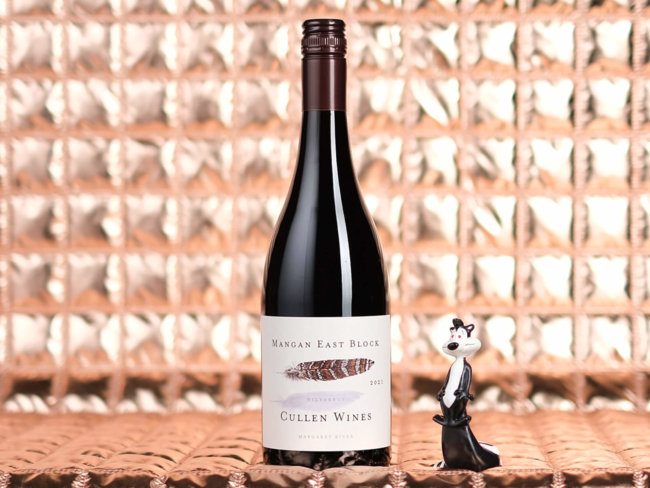
2021 Cullen Wines ‘Mangan East Block’
A dark tangle of ripe wild berries, dusky florals and spices are ferried on a palate that has the classic tannic growl of malbec, but with amply generous fruit in support.
  • Producer

    Cullen

  • Region

    Margaret River

  • RRP

    $55

  • Vintage

    2021

  • Variety/Varieties

    Malbec Petit verdot

  • Alc./Vol.

    13.5%

Vanya Cullen’s best known for her iconic cabernet and chardonnay, but her ‘Mangan East Block’, which heroes malbec and petit verdot, is equally deserving of attention. A dark tangle of ripe wild berries, dusky florals and spices are ferried on a palate that has the classic tannic growl of malbec, but with amply generous fruit in support.

Tasting note

This vintage, petit verdot occupies a larger slice of the wine (41%), but malbec is still in majority (49%). There’s a warm generosity matched with a lift of dusky florals and warm spices. Dark forest berries, ripe mulberry and a hint of black cherry sit alongside coca nibs, black spices, pumpernickel and a humus-like earthy note. That spectrum continues on the palate, with fruit generosity well hemmed in by robust tannins, the malbec playing a classic part, with a bitter chocolate grip and mouth puckering dryness, which only adds to the charm.

Themes of this wine

Malbec

Malbec is a French grape that has become much more synonymous with Argentina, where it dominates the country’s vineyards. In Australia, malbec is typically blended as a minor component, but with better vine material and new thinking, malbec’s personality is emerging from the shadows. With a generally dark fruit profile, plums, dark cherries and blackberries, malbec can range from the deeply fruited and ruggedly tannic to more supple and silky expressions – typically those from Argentina, where the vine material is quite different to everywhere else.

Petit Verdot

One of the five principal red grapes of Bordeaux, petit verdot is typically employed in the lowest percentages in blends. It is a late ripener, and the latest of the Bordeaux quintet, often struggling to reach full maturity in its home region. When ripe, however, it has intense flavour, colour, tannin and acidity, making it a compelling blending component. That slow maturation cycle also makes it a good prospect in warmer zones, and it is planted in quite high concentration in Australia’s Riverland, even eclipsing the total plantings in France by a significant margin.

Margaret River

If you’re after a wine region with a healthy dose of conspicuous glamour, then Margaret River has it all. Three hours south of Perth, ‘Margs’ is littered with iconic wineries, many with dazzling cellar doors and world-class restaurants. And then there’s the abundant sunshine, and the beaches – oh, those beaches
 It’s a beautiful, beautiful place, and for a young wine region it’s very mature, with well-established paths to success built largely on the twin pillars of chardonnay and cabernet sauvignon (et al). Names like Cullen, Moss Wood, Woodlands, Leeuwin Estate and Vasse Felix feel like they’re etched in stone, but in the last little while, smaller players have been making their mark.

Biodynamic

An organic farming method created by Rudolph Steiner in the 1920s, biodynamics is a slightly mystical approach, employing elaborate organic ‘preparations’ to restore the natural balance of the soil and encourage microorganisms. It also observes the lunar cycle to prescribe actions in the vineyard and winery. Why some of it works is not clearly understood, but it is used by some of the world’s greatest producers.

2021 Cullen Wines ‘Mangan East Block’

GET FIRST ACCESS TO THE NEXT WINE ICONS – DELIVERED

Find out more

Each month, get 3 bottles of our freshest discoveries. We taste thousands to bring you the best.

Join us and support emerging winemakers, sustainable vineyards, and the development of young professionals.

Find out more
“One of the highlights of my drinking year.”
— Max Allen, Wine Writer
“The future of wine in Australia.”
— Broadsheet
“The cutting edge of Australian wine.”
— The Australian
2016 Mérite Malbec
A typical varietal tussle of dark fruit is given a good deal of complexity with spice and herbal notes, a ruggedly tannic grip asserting both variety and a pleasingly classic Australian feel.
  • Producer

    Mérite

  • Region

    Wrattonbully

  • RRP

    $60

  • Vintage

    2016

  • Variety/Varieties

    Malbec

  • Alc./Vol.

    14%

Mérite have made a name for themselves with merlot, but they are doing just as fine work with malbec, planting superior vine clones and giving a new window onto the variety. A typical varietal tussle of dark fruit is given a good deal of complexity with spice and herbal notes, a ruggedly tannic grip asserting both variety and a pleasingly classic Australian feel.

Tasting note

There’s a dark fruit play here, with blackberry, ripe boysenberry and bitter chocolate notes, a lift of bay leaf, dried mint and vanillin oak complexing, along with flashes of carraway and clove. There’s fruit intensity and generosity on the palate, but malbec has its say with a grippy cuff of tannins pulling that all in, giving this a classic Australian dry red feel, but with oodles of varietal personality and individual charm.

Themes of this wine

Malbec

Malbec is a French grape that has become much more synonymous with Argentina, where it dominates the country’s vineyards. In Australia, malbec is typically blended as a minor component, but with better vine material and new thinking, malbec’s personality is emerging from the shadows. With a generally dark fruit profile of plums, dark cherries and blackberries, malbec can range from the deeply fruited and ruggedly tannic to more supple and silky expressions.

Wrattonbully

A region in South Australia’s Limestone Coast viticultural zone, Wrattonbully extends north from Coonawarra, running along the Victorian border. It shares many features with its more famous neighbour to the south, with terra rossa soils and a dominance of red grapes, with only 15 per cent of the vines given to white varieties. Also, like Coonawarra, cabernet sauvignon is king accounting for over 40 per cent of total plantings.

2016 Mérite Malbec

GET FIRST ACCESS TO THE NEXT WINE ICONS – DELIVERED

Find out more

Each month, get 3 bottles of our freshest discoveries. We taste thousands to bring you the best.

Join us and support emerging winemakers, sustainable vineyards, and the development of young professionals.

Find out more
“One of the highlights of my drinking year.”
— Max Allen, Wine Writer
“The future of wine in Australia.”
— Broadsheet
“The cutting edge of Australian wine.”
— The Australian
2020 Cullen ‘Mangan East Block’
Malbec and petit verdot conspire to give this wine a darkly fruited, spicy yet floral and lithe profile, packed with complex fruit flavours stretched over a savoury canvas.
  • Producer

    Cullen

  • Region

    Margaret River

  • RRP

    $55

  • Vintage

    2020

  • Variety/Varieties

    Malbec

  • Alc./Vol.

    13.5%

Across the road from the Cullen home vineyard, the Mangan Vineyard is a little younger, planted in 1995–97, and is farmed in the same meticulous biodynamic way as the rest of the estate. Malbec and petit verdot conspire to give this wine a darkly fruited, spicy yet floral and lithe profile, packed with complex fruit flavours stretched over a savoury canvas.

Tasting note

Malbec takes the lead here (82%), with petit verdot backing up (18%), with both varieties providing a darkly complex array of red and dark fruits, sultry spice and dusky florals. Dark plum, currants, mulberry, dried rose, violets, woodsy herbs and dark spices all sit in a complex package, marked by intensity but with an elegant composure. There is a supple intensity on the palate, but it’s wound up in a web of fine but assertive tannins, stretching the flavours long and savoury.

Themes of this wine

Malbec

Malbec is a French grape that has become much more synonymous with Argentina, where it dominates the country’s vineyards. In Australia, malbec is typically blended as a minor component, but with better vine material and new thinking, malbec’s personality is emerging from the shadows. With a generally dark fruit profile, plums, dark cherries and blackberries, malbec can range from the deeply fruited and ruggedly tannic to more supple and silky expressions – typically those from Argentina, where the vine material is quite different to everywhere else.

Petit Verdot

One of the five principal red grapes of Bordeaux, petit verdot is typically employed in the lowest percentages in blends. It is a late ripener, and the latest of the Bordeaux quintet, often struggling to reach full maturity in its home region. When ripe, however, it has intense flavour, colour, tannin and acidity, making it a compelling blending component. That slow maturation cycle also makes it a good prospect in warmer zones, and it is planted in quite high concentration in Australia’s Riverland, even eclipsing the total plantings in France by a significant margin.

Margaret River

If you’re after a wine region with a healthy dose of conspicuous glamour, then Margaret River has it all. Three hours south of Perth, ‘Margs’ is littered with iconic wineries, many with dazzling cellar doors and world-class restaurants. And then there’s the abundant sunshine, and the beaches – oh, those beaches
 It’s a beautiful, beautiful place, and for a young wine region it’s very mature, with well-established paths to success built largely on the twin pillars of chardonnay and cabernet sauvignon (et al). Names like Cullen, Moss Wood, Woodlands, Leeuwin Estate and Vasse Felix feel like they’re etched in stone, but in the last little while, smaller players have been making their mark.

Biodynamic

An organic farming method created by Rudolph Steiner in the 1920s, biodynamics is a slightly mystical approach, employing elaborate organic ‘preparations’ to restore the natural balance of the soil and encourage microorganisms. It also observes the lunar cycle to prescribe actions in the vineyard and winery. Why some of it works is not clearly understood, but it is used by some of the world’s greatest producers.

2020 Cullen ‘Mangan East Block’

GET FIRST ACCESS TO THE NEXT WINE ICONS – DELIVERED

Find out more

Each month, get 3 bottles of our freshest discoveries. We taste thousands to bring you the best.

Join us and support emerging winemakers, sustainable vineyards, and the development of young professionals.

Find out more
“One of the highlights of my drinking year.”
— Max Allen, Wine Writer
“The future of wine in Australia.”
— Broadsheet
“The cutting edge of Australian wine.”
— The Australian
2019 Cullen ‘Dancing in the Moonlight’ RosĂ©
This rosé is an expression of all the red varieties in the Cullen vineyard viewed through a deep pink lens. Fragrant, spicy and herbal, with a plump of richness cleaned up with a gentle grip working in concert with the acidity.
  • Producer

    Cullen

  • Region

    Margaret River

  • RRP

    $25

  • Vintage

    2019

  • Variety/Varieties

    Cabernet franc Cabernet sauvignon Malbec Merlot

  • Alc./Vol.

    13.3%

Vanya Cullen makes some of Margaret River’s most iconic classic wines, but she also wanders creatively, with her Supernatural series embodying that spirit of adventure. Cullen’s rosĂ© is an expression of all the red varieties in the vineyard viewed through a deep pink lens, fragrant, spicy and herbal, with a plump of richness cleaned up with a gentle grip working in concert with the acidity.

Tasting note

Made from all the red varieties at the biodynamic Cullen vineyard – cabernet sauvignon, cabernet franc, merlot, malbec – this rosĂ© is made by the saignĂ©e method. Lifted smoky notes of leafy cabernet with essence-like red and dark berries, blackcurrant leaf and freshly cut soft herbs. This is dialled up a little in colour, thumbing its nose at Provence-like paleness, and it does the same with the flavour, along with a pillowy slip of sweetness greeting the palate first up, then cleaning up with gentle tannin and mild but persuasive acidity.

Themes of this wine

Saignée

The saignée method is where juice is drained from crushed red grapes prior to fermentation to increase the impact of tannins and colour when the grapes are macerated. It effectively concentrates that wine, while providing juice blushed with colour that can be made into rosé

Biodynamic

An organic farming method created by Rudolph Steiner in the 1920s, biodynamics is a slightly mystical approach, employing elaborate organic ‘preparations’ to restore the natural balance of the soil and encourage microorganisms. It also observes the lunar cycle to prescribe actions in the vineyard and winery. Why some of it works is not clearly understood, but it is used by some of the world’s greatest producers.

Cabernet sauvignon

The world’s most prolific wine grape, cabernet sauvignon has been planted in Australia since the first days of viticulture here. Today, its prime homes are arguably Margaret River and Coonawarra, but the Yarra Valley and even the Hunter Valley mount very convincing cases, too. Cassis or blackcurrant is one of cabernet sauvignon’s prime flavour profiles, though blackberry, mulberry and plum also feature. Notes of mint and capsicum (pyrazines) generally appear when less ripe, with a leafy varietal character persisting in most riper versions, though ultra-rich versions will tend to lose this and become more concentrated in a dark berry conserve-like way.

Cabernet franc

Associated primarily with Bordeaux, where it partners with cabernet sauvignon, merlot, petit verdot and malbec, cabernet franc reaches its greatest heights on the Right Bank of the Gironde estuary. There it goes to making some of the greatest and most expensive wines of Bordeaux – such as from St-Emilion and Pomerol – often in league with merlot, while on the warmer Left Bank, cabernet sauvignon is king. The Loire Valley is the other prime territory for cabernet franc, where it is mostly bottled unblended. Franc shares much of its profile with cabernet sauvignon, but franc tends to be less imposing, more fragrant with a less-pronounced tannin structure, and if pushed a little riper can be quite soft on the palate with pooling ripe fruit.

Merlot

Merlot has developed a reputation as a grape that produces soft and gentle wines, but it is far more than that. Although it’s capable of making wines of great elegance and detail when bottled solo, merlot more often makes a major contribution to blends, buffering cabernet sauvignon’s sterner side, adding depth and filling out the palate with fruit. Merlot is the second-most widely planted grape in the world, and it’s the most planted in France, where it originates. Merlot is a grape of principal importance in Bordeaux, accompanying cabernet sauvignon and cabernet franc in occupying the lion’s share of those famous blended wines.

Malbec

Malbec is a French grape that has become much more synonymous with Argentina, where it dominates the country’s vineyards. In Australia, malbec is typically blended as a minor component, but with better vine material and new thinking, malbec’s personality is emerging from the shadows. With a generally dark fruit profile, plums, dark cherries and blackberries, malbec can range from the deeply fruited and ruggedly tannic to more supple and silky expressions – typically those from Argentina, where the vine material is quite different to everywhere else.

2019 Cullen ‘Dancing in the Moonlight’ RosĂ©

GET FIRST ACCESS TO THE NEXT WINE ICONS – DELIVERED

Find out more

Each month, get 3 bottles of our freshest discoveries. We taste thousands to bring you the best.

Join us and support emerging winemakers, sustainable vineyards, and the development of young professionals.

Find out more
“One of the highlights of my drinking year.”
— Max Allen, Wine Writer
“The future of wine in Australia.”
— Broadsheet
“The cutting edge of Australian wine.”
— The Australian
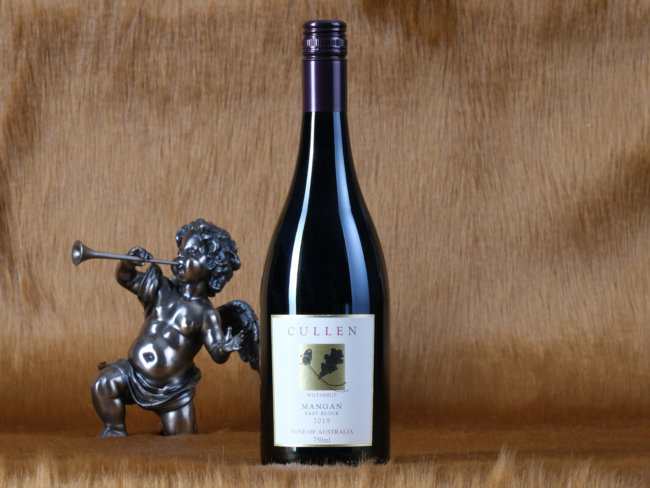
2019 Cullen ‘Mangan East Block’
A Malbec-dominant red from the Mangan Vineyard, across the road from Cullen’s home site, this is brim full of spice and dark fruits with a refined finish – it makes a pretty compelling case for the grape.
  • Producer

    Cullen

  • Region

    Margaret River

  • RRP

    $45

  • Vintage

    2019

  • Variety/Varieties

    Malbec Petit verdot

  • Alc./Vol.

    13.5%

A Malbec-dominant red from the Mangan Vineyard, across the road from Cullen’s home site, this is brim full of spice and dark fruits with a refined finish – it makes a pretty compelling case for the grape.

Tasting note

This is deep and darkly fruited, with so many layers of spice, but it’s not brooding or overly big. Sour black fruits, wild plums, blackberries, mulberries, panforte and licorice on the nose, with a lilting fragrance of violets set against a tarry minerality. Those flavours kick through to the palate, with caraway seed and pumpernickel notes as well. Intense and generously fruited, this has presence without being rich, with a savoury feel to it and deceptive, almost sneaky tannins lying in wait, with hard herb featuring through the long finish.

Themes of this wine

Malbec

Aside from a starring role in the French appellation of Cahors and near idolatry in Argentina, Malbec is generally relegated to be a bit player in blends, classically in Bordeaux and also in the Loire Valley, where it is called cot. Malbec is typically dark fruited, with grippy tannins a major feature.

Margaret River

If you’re after a wine region with a healthy dose of conspicuous glamour, then Margaret River has it all. Three hours south of Perth, ‘Margs’ is littered with iconic wineries, many with dazzling cellar doors and world-class restaurants. And then there’s the abundant sunshine, and the beaches – oh, those beaches
 It’s a beautiful, beautiful place, and for a young wine region it’s very mature, with well-established paths to success built largely on the twin pillars of chardonnay and cabernet sauvignon (et al). Names like Cullen, Moss Wood, Woodlands, Leeuwin Estate and Vasse Felix feel like they’re etched in stone, but in the last little while, smaller players have been making their mark, too.

Read more about Margaret River, here.

2019 Cullen ‘Mangan East Block’

GET FIRST ACCESS TO THE NEXT WINE ICONS – DELIVERED

Find out more

Each month, get 3 bottles of our freshest discoveries. We taste thousands to bring you the best.

Join us and support emerging winemakers, sustainable vineyards, and the development of young professionals.

Find out more
“One of the highlights of my drinking year.”
— Max Allen, Wine Writer
“The future of wine in Australia.”
— Broadsheet
“The cutting edge of Australian wine.”
— The Australian
2019 Cullen ‘Mangan East Block’

The Next Wine Icons – Delivered

Each month, get 3 bottles of fresh discoveries.
We taste thousands to bring you the best.

Bookmark this job

Please sign in or create account as candidate to bookmark this job

Save this search

Please sign in or create account to save this search

create resume

Create Resume

Please sign in or create account as candidate to create a resume