2024 Yangarra Field Blend McLaren Vale

Read more
2024 Yangarra Field Blend
Fresh, vibrant and light, yet layered with intricate detail, this wine is a joyous and approachable example of the genius of the late Peter Fraser – a champion of not only grenache, but also of lesser-known climate-apt varieties.
  • Producer

    Yangarra

  • Region

    McLaren Vale

  • RRP

    $27

  • Vintage

    2024

  • Variety/Varieties

    Carignan Cinsault Grenache Mourvèdre

  • Alc./Vol.

    13.5%

The recent passing of Yangarra’s winemaker and general manager Peter Fraser has sent shockwaves through the Australian wine community – we continue to mourn the loss of a man who was not only a brilliant winemaker, but was also, in his own quiet way, a true thought leader. While much of the focus since his passing has been on his groundbreaking (and now relatively pricy) single-vineyard ‘High Sands’ Grenache, this much more affordably priced wine is equally a testament to Fraser’s forward-thinking approach. A climate-apt tweak of the established ‘GSM’ blend template, this wine – mostly made from grenache, accompanied by small portions of carignan, counoise, cinsault, and mourvèdre (aka mataro) – is an ode to the freshness and vibrancy that is possible in warm-climate wines when varieties are chosen for their suitability to the region, not the dictates of the market.

Tasting note

A beautiful translucent ruby colour in the glass, with equally seductive and bright aromas of fresh raspberries, sour Morello cherries, and freshly crushed pomegranate arils, alongside a whiff of rooibos tea. It’s fresh and silky on the palate, with bright, crunchy acidity, some pleasing mid-palate weight (more than the bright fruit character would lead you to believe), and very fine, black tea–like tannins providing just the right amount of grip. There’s a sneaky depth of flavour towards the back of the palate – possibly from the dash of mourvèdre – that shows up as mulberry fruit and brambly spice notes. There’s plenty of layered flavour and nuance to be unpicked here if you care to look for it – hints of Australian bush herbs, the savoury edge of those tea-like tannins, a floral lift to the aromas – but, like its maker, this isn’t a wine that forces you to acknowledge its brilliance. Instead it’s charming, unfussy, and joyous – a beautiful everyday red from a master of grenache.

Themes of this wine

Grenache

The great grape of the Southern Rhône, grenache, has also found many homes around the world, from Spain, to Italy, to California, while Australia is home to the world’s oldest productive grenache vines, planted in 1948. Today, a renaissance is seeing the grape championed, with makers in McLaren Vale arguably turning out the most compelling examples.

McLaren Vale

While it couldn’t feel any more removed from city life, the McLaren Vale wine region is inside Adelaide’s metropolitan area. And although the township itself is only 40 minutes by car from central Adelaide and vineyards brush up against ever-encroaching housing, McLaren Vale remains unaffected by the urban sprawl. With deeply etched history, the Vale has a slow-paced sense of calm and an extraordinary wealth of untrammelled beauty. It is home to some of this country’s most beautifully pristine beaches, as well as some of the world’s most forward-thinking grape-growers and winemakers. And with over 80 cellar doors, it is an essential destination for wine lovers – and anyone else, for that matter.

Climate-apt viticulture

Most wine consumers are familiar with only a small handful of the 1300+ grape varieties currently turned into wine. These well-known varieties are often called ‘international’ varieties because, thanks to consumer demand, they’re now grown across a wide range of climatic conditions worldwide (even if they nearly all have French origins). But not all of these well-known varieties are suited to the conditions in which they’re grown – leading to resource-consuming viticultural practices (such as intensive irrigation) to successfully grow fruit, and extra interventions in the winery (such as acid additions) to turn that fruit into marketable wine. Climate-apt viticulture flips that script by starting with a match of grape variety to climate, then letting winemaking and marketing follow suit. In warm-climate regions that might mean planting obscure varieties – with names like arinto, cinsault, and tinta cao – that ripen later and retain their acidity in the heat, leading to wines that require far less work and additions in the cellar. It’s a win-win for both flavour and environmental sustainability – but the hardest part is usually getting consumers to bring home a bottle that has an unfamiliar variety on the label.

2024 Yangarra Field Blend

GET FIRST ACCESS TO THE NEXT WINE ICONS – DELIVERED

Find out more

Each month, get 3 bottles of our freshest discoveries. We taste thousands to bring you the best.

Join us and support emerging winemakers, sustainable vineyards, and the development of young professionals.

Find out more
“One of the highlights of my drinking year.”
— Max Allen, Wine Writer
“The future of wine in Australia.”
— Broadsheet
“The cutting edge of Australian wine.”
— The Australian
2023 Yelland & Papps ‘Vin de Soif’
A Barossa red with a French name that drinks like a pinot noir? Mais oui. This bright, crunchy blend of three Mediterranean varieties is a dangerously drinkable departure from the Barossa norm.
  • Producer

    Yelland & Papps

  • Region

    Barossa Valley

  • RRP

    $32

  • Vintage

    2023

  • Variety/Varieties

    Cinsault Grenache Mourvèdre

  • Alc./Vol.

    13%

The French have a lovely phrase for light-bodied, easy-going wines that are meant for drinking, not thinking: vin de soif, literally ‘wine for thirst’. New-wave Barossa pioneers Susan and Michael Papps buck the region’s reputation for big, brooding reds with this wine, which cleverly combines three varieties that happily retain freshness in Barossa’s heat with lo-fi winemaking to deliver a vibrant, crunchy red wine that looks great with or without a little chill.

Tasting note

This wine brings a riot of red fruit to its aroma: a tangle of pithy red apple skin, raspberry, cranberry, and sour morello cherry. There’s a tasteful herbal note reminiscent of rooibos tea or melaleuca scrub that adds complexity to the fruit, possibly coming from the wine’s cinsault component. As the name suggests, this is frighteningly easy to drink, with the fruit flavours carried along the palate by its fresh, crunchy acidity, and its light body leaving the palate wanting another sip. There’s a judicious little touch of bitterness at the close, and some very light and fine tannins – enough complexity to reward careful tasting, but not so much complexity that analysis gets in the way of fun.

Themes of this wine

Grenache

The great grape of the Southern Rhône, grenache, has also found many homes around the world, from Spain, to Italy, to California, while Australia is home to the world’s oldest productive grenache vines, planted in 1948. Today, a renaissance is seeing the grape championed, with makers in McLaren Vale arguably turning out the most compelling examples.

Cinsault

Cinsault has been grown in Australia since pioneering days, but it has typically been swallowed by blends. However, its ability to shrug off hot and dry conditions and still make elegant wines with plenty of acidity is seeing its star rise in warmer zones like the Barossa Valley. Fragrant and quite pretty, cinsault can have very lifted aromas of red berry fruits, like raspberry, strawberry and cherry, while some blue floral notes, like violet also typically feature. It rarely achieves much more than midweight, with gentle tannins and decent acidity.

Mataro

Mourvèdre – or mataro if you’re from South Australia – is a grape that is typically blended, usually with grenache and shiraz. Bottled solo, it often makes dark-fruited wines with gruffly earthy/herbal notes and plenty of tannin, but it makes some of the world’s best rosés, too.

Blending

Most wines are a blend of some sort. It may be a blend of the same variety from the same vineyard, but with different blocks, clones, aspects, picking dates, ferments and then barrels (if barrel aged), each batch is a little different. Sometimes everything goes back in, and sometimes a winemaker will select the parcels to make a particular style of finished wine or just the best wine they can. This principle is used across varieties, too, with many traditional regions in the Old World blending across varieties to make a complete whole, with some grapes adding fragrance or fruit depth, some tannin, some acid … the art of the blender is to get the balance right. Increasingly, winemakers are breaking the established rules of these classic blends, making surprisingly new expressions from varieties that have rarely shared a bottle prior.

Barossa Valley

The Barossa is arguably Australia’s most revered wine region. It dwarfs many other fine wine regions for scale, while firmly maintaining a quality profile, with its distinctive style and character recognised worldwide. It is dripping in history, has far and away the largest resource of old and ancient vines in the country, and fifth- and sixth-generation growers and makers proliferate. It is fair to call it the cornerstone of Australian wine. It is the home of powerful red wines, established names making established styles, but there are also makers finding new meaning in the territory.

2023 Yelland & Papps ‘Vin de Soif’

GET FIRST ACCESS TO THE NEXT WINE ICONS – DELIVERED

Find out more

Each month, get 3 bottles of our freshest discoveries. We taste thousands to bring you the best.

Join us and support emerging winemakers, sustainable vineyards, and the development of young professionals.

Find out more
“One of the highlights of my drinking year.”
— Max Allen, Wine Writer
“The future of wine in Australia.”
— Broadsheet
“The cutting edge of Australian wine.”
— The Australian
2022 Smallfry ‘Starry Starry Night’ Cinsault
This is a cinsault to get people talking about cinsault. Pitched in a very of the moment midweight style, this sports a riot of red berries paired with spice and dusty minerality, a fine but engagingly sandy tannin cleaning up the finish.
  • Producer

    Smallfry

  • Region

    Barossa Valley

  • RRP

    $36

  • Vintage

    2022

  • Variety/Varieties

    Cinsault

  • Alc./Vol.

    12%

This is a cinsault to get people talking about cinsault. Pitched in a very of the moment midweight style, this sports a riot of red berries paired with spice and dusty minerality, a fine but engagingly sandy tannin cleaning up the finish.

Tasting note

This comes under the crown-sealed small batch runs that Smallfry make, and 2022 has yielded an exceptional reflection of a little understood variety from their biodynamic vineyard. More commonly ending up in blends for red and rosĂŠ, this is a rare varietal bottling that shows what an exciting grape it can be. Pitched in a light to midweight style, this is very much red fruited, with aromas of cranberry, red cherry, redcurrant and subtle flecks of spice. Those notes persist on the palate, with red apple skin flavour and attendant grippy texture, along with a sandy mineral tannin and some earthy complexity to reign the bright fruit in through the persistent finish.

Themes of this wine

Cinsault

Cinsault has been grown in Australia since pioneering days, but it has typically been swallowed by blends. However, its ability to shrug off hot and dry conditions and still make elegant wines with plenty of acidity is seeing its star rise in warmer zones like the Barossa Valley. Fragrant and quite pretty, cinsault can have very lifted aromas of red berry fruits, like raspberry, strawberry and cherry, while some blue floral notes, like violet also typically feature. It rarely achieves much more than midweight, with gentle tannins and decent acidity.

Barossa

The Barossa is arguably Australia’s most revered wine region. It dwarfs many other fine wine regions for scale, while firmly maintaining a quality profile, with its distinctive style and character recognised worldwide. It is dripping in history, has far and away the largest resource of old and ancient vines in the country, and fifth- and sixth-generation growers and makers proliferate. It is fair to call it the cornerstone of Australian wine. It is the home of powerful red wines, established names making established styles, but there are also makers finding new meaning in the territory.

Biodynamic

An organic farming method created by Rudolph Steiner in the 1920s, biodynamics is a slightly mystical approach, employing elaborate organic ‘preparations’ to restore the natural balance of the soil and encourage microorganisms. It also observes the lunar cycle to prescribe actions in the vineyard and winery. Why some of it works is not clearly understood, but it is used by some of the world’s greatest producers.

2022 Smallfry ‘Starry Starry Night’ Cinsault

GET FIRST ACCESS TO THE NEXT WINE ICONS – DELIVERED

Find out more

Each month, get 3 bottles of our freshest discoveries. We taste thousands to bring you the best.

Join us and support emerging winemakers, sustainable vineyards, and the development of young professionals.

Find out more
“One of the highlights of my drinking year.”
— Max Allen, Wine Writer
“The future of wine in Australia.”
— Broadsheet
“The cutting edge of Australian wine.”
— The Australian
2021 Spinifex RosĂŠ
A riot of wild red berries accented with earthy complexity, this is at once bright, juicy and forward while having gently earthy mineral notes, textural across the palate but decidedly dry.
  • Producer

    Spinifex

  • Region

    Barossa Valley

  • RRP

    $28

  • Vintage

    2021

  • Variety/Varieties

    Cinsault Grenache Mourvèdre Shiraz (Syrah)

  • Alc./Vol.

    12.5%

RosĂŠ in this country had to shed considerable baggage to get where it is today, transforming from sickly sweet hot-pink affairs to prettily pale wines that stress bright fruit flavours and savoury dryness coupled with texture. Spinifex played a vital role in that renaissance, and it continues to lead the field. A riot of wild red berries accented with earthy complexity, this is at once bright, juicy and forward while having gently earthy mineral notes, textural across the palate but decidedly dry.

Tasting note

A peachy pink, this is vibrantly fruitful, with a wash of red-berried fruit, wild raspberries, white strawberries and redcurrants, with watermelon rind and orange oil, some dusty mineral notes adding a gentle earthy complexing quality. The palate follows that theme, with super-bright fruits that never drift into confection, a burr of grape tannin pairing up with the acid to give maximum refreshment value though the dry, mineral finish.

Themes of this wine

RosĂŠ

From its spiritual home in Provence, in southern France, rosĂŠ can be both democratically affordable and dizzyingly expensive, but it rarely slips into the sordid or gets hung up on being too serious. It maintains a broad welcoming smile. It says, drink me. It says, relax, have fun. Those bottles of rosy-tinged sunshine have been exported to all corners of the globe in their legion, and they have found their mark, fashioning the expectations of drinkers and shaping the decisions of winemakers. Today, Australian rosĂŠ has grown up, with wines that can both be deliciously frivolous, built for sunshine and good times, as well as having a more serious side, emphasising detail and nuance, and made to pair with food.

Grenache

The great grape of the Southern Rhône, grenache, has also found many homes around the world, from Spain, to Italy, to California, while Australia is home to the world’s oldest productive grenache vines, planted in 1948. Today, a renaissance is seeing the grape championed, with makers in McLaren Vale arguably turning out the most compelling examples.

Mourvèdre

Mourvèdre – or Mataro if you’re from South Australia – is a grape that is typically blended, usually with grenache and shiraz. Bottled solo, it often makes dark-fruited wines with gruffly earthy/herbal notes and plenty of tannin, but it makes some of the world’s best rosés, too.

Syrah/shiraz

Shiraz dominates the Australian wine industry, accounting for nearly a third of this country’s vines. The grape’s traditional home is in France’s Northern Rhône, with wines that combine elegance and power, while Australia is perhaps best known for the muscular styles from warmer areas. Today, drinkers of Australian shiraz are spoilt for choice with expressions ranging from the elegant and spicy to the monumental.

Cinsault

Cinsault has been grown in Australia since pioneering days, but it has typically been swallowed by blends. However, its ability to shrug off hot and dry conditions and still make elegant wines with plenty of acidity is seeing its star rise in warmer zones like the Barossa Valley. Fragrant and quite pretty, cinsault can have very lifted aromas of red berry fruits, like raspberry, strawberry and cherry, while some blue floral notes, like violet also typically feature. It rarely achieves much more than midweight, with gentle tannins and decent acidity.

Barossa

The Barossa is arguably Australia’s most revered wine region. It dwarfs many other fine wine regions for scale, while firmly maintaining a quality profile, with its distinctive style and character recognised worldwide. It is dripping in history, has far and away the largest resource of old and ancient vines in the country, and fifth- and sixth-generation growers and makers proliferate. It is fair to call it the cornerstone of Australian wine. It is the home of powerful red wines, established names making established styles, but there are also makers finding new meaning in the territory.

2021 Spinifex RosĂŠ

GET FIRST ACCESS TO THE NEXT WINE ICONS – DELIVERED

Find out more

Each month, get 3 bottles of our freshest discoveries. We taste thousands to bring you the best.

Join us and support emerging winemakers, sustainable vineyards, and the development of young professionals.

Find out more
“One of the highlights of my drinking year.”
— Max Allen, Wine Writer
“The future of wine in Australia.”
— Broadsheet
“The cutting edge of Australian wine.”
— The Australian
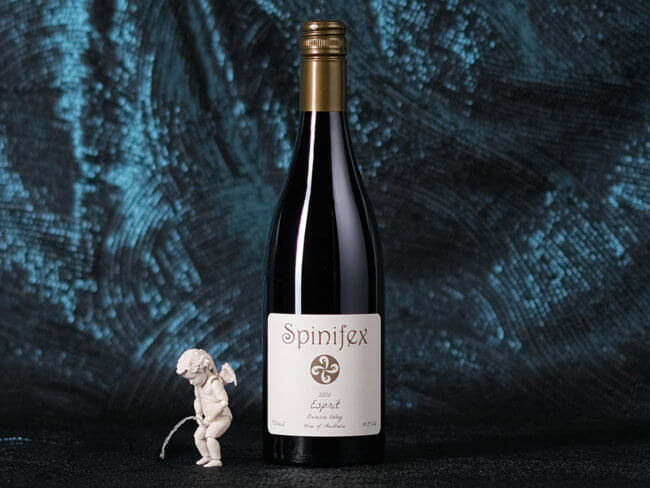
2020 Spinifex ‘Esprit’
Built from mataro, grenache and cinsault, this illustrates what makes blends so compelling – each component pooling into the gaps left by the others, leaving a seamless whole, laced with ripe red fruits, spice and floral notes, the palate supple, with fine grip and natural freshness.
  • Producer

    Spinifex

  • Region

    Barossa Valley

  • RRP

    $35

  • Vintage

    2020

  • Variety/Varieties

    Cinsault Grenache Mourvèdre

  • Alc./Vol.

    14.5%

Pete Schell is revered by his peers for many things, but his skill at blending across varieties and across a mosaic of micro-parcels of sites, blocks and ferments is the stuff of legend. Built from mataro, grenache and cinsault, this illustrates what makes blends so compelling – each component pooling into the gaps left by the others, leaving a seamless whole, laced with ripe red fruits, spice and floral notes, the palate supple, with fine grip and natural freshness.

Tasting note

On the nose, lifted ripe red berries, led by raspberry and dark red cherries, with mulberry notes chiming in, a dusting of peppery spice and blue florals accenting. There’s ample fruit and depth here, but in typical Spinifex fashion, it’s so well composed and balanced, ripe but not broad, savoury but not drying. Flavours unlock even more with air, revealing an even more sleek and succulent beast, fine but assertive tannins and vibrant natural acidity closing out a detailed and effortlessly balanced wine.

Themes of this wine

Mourvèdre

Mourvèdre – or Mataro if you’re from South Australia – is a grape that is typically blended, usually with grenache and shiraz. Bottled solo, it often makes dark-fruited wines with gruffly earthy/herbal notes and plenty of tannin, but it makes some of the world’s best rosés, too.

Grenache

The great grape of the Southern Rhône, grenache, has also found many homes around the world, from Spain, to Italy, to California, while Australia is home to the world’s oldest productive grenache vines, planted in 1948. Today, a renaissance is seeing the grape championed, with makers in McLaren Vale arguably turning out the most compelling examples.

Cinsault

Cinsault has been grown in Australia since pioneering days, but it has typically been swallowed by blends. However, its ability to shrug off hot and dry conditions and still make elegant wines with plenty of acidity is seeing its star rise in warmer zones like the Barossa Valley. Fragrant and quite pretty, cinsault can have very lifted aromas of red berry fruits, like raspberry, strawberry and cherry, while some blue floral notes, like violet also typically feature. It rarely achieves much more than midweight, with gentle tannins and decent acidity.

Blending

Most wines are a blend of some sort. It may be a blend of the same variety from the same vineyard, but with different blocks, clones, aspects, picking dates, ferments and then barrels (if barrel aged), each batch is a little different. Sometimes everything goes back in, and sometimes a winemaker will select the parcels to make a particular style of finished wine or just the best wine they can. This principle is used across varieties, too, with many traditional regions in the Old World blending across varieties to make a complete whole, with some grapes adding fragrance or fruit depth, some tannin, some acid… the art of the blender is to get the balance right. Increasingly, winemakers are breaking the established rules of these classic blends, making surprisingly new expressions from varieties that have rarely shared a bottle prior.

Barossa

The Barossa is arguably Australia’s most revered wine region. It dwarfs many other fine wine regions for scale, while firmly maintaining a quality profile, with its distinctive style and character recognised worldwide. It is dripping in history, has far and away the largest resource of old and ancient vines in the country, and fifth- and sixth-generation growers and makers proliferate. It is fair to call it the cornerstone of Australian wine. It is the home of powerful red wines, established names making established styles, but there are also makers finding new meaning in the territory.

2020 Spinifex ‘Esprit’

GET FIRST ACCESS TO THE NEXT WINE ICONS – DELIVERED

Find out more

Each month, get 3 bottles of our freshest discoveries. We taste thousands to bring you the best.

Join us and support emerging winemakers, sustainable vineyards, and the development of young professionals.

Find out more
“One of the highlights of my drinking year.”
— Max Allen, Wine Writer
“The future of wine in Australia.”
— Broadsheet
“The cutting edge of Australian wine.”
— The Australian
2020 Smallfry ‘Electrik Violet’
Juicy and dark, but floral and bright at the same time, this is red wine built for drinking not sipping.
  • Producer

    Smallfry

  • Region

    Barossa Valley

  • RRP

    $28

  • Vintage

    2020

  • Variety/Varieties

    Cinsault Grenache

  • Alc./Vol.

    11.5%

Juicy and dark, but floral and bright at the same time, this is red wine built for drinking not sipping.

Tasting note

Bright and lifted nose of blueberry, black cherries, damson plums and blue floral notes, this is just so pulpy, open and vibrant. The grenache kicks in more of its classic flavours on the palate, with wild raspberry notes poking out through the darker fruits, while there’s a furry, grape skin texture to the gentle tannins, with a salted bitter chocolate finish. There’s plenty of fruit flavour and brightness here, but it’s light on its feet and vibrant. This can take a little chill, not so it’s cold, but to taking the edges off with 30 minutes in the fridge makes this very hard to put down.

Themes of this wine

Cinsault

Having been grown in Australia since pioneering days, cinsault has typically been swallowed by blends. However, its ability to shrug off hot and dry conditions and still make elegant wines with plenty of acidity is seeing its star rise in warmer zones like the Barossa Valley.

Grenache

The great grape of the Southern Rhône, grenache, has also found many homes around the world, from Spain, to Italy, to California, while Australia is home to the world’s oldest productive grenache vines, planted in 1948. Today, a renaissance is seeing the grape championed, with makers in McLaren Vale arguably turning out the most compelling examples.

Barossa Valley

The Barossa is arguably Australia’s most revered wine region. It dwarfs other fine wine regions for scale, while firmly maintaining a quality profile, with its distinctive style and character recognised worldwide. It is dripping in history, has far and away the largest resource of old and ancient vines in the country, and fifth- and sixth-generation growers and makers proliferate. It is fair to call it the cornerstone of Australian wine. It is the home of powerful red wines, established names making established styles, but there are also makers finding new meaning in the territory. The Barossa has been fertile ground for YGOW finalists, producing four Young Guns, Matt Gant (First Drop, 2007), Pete Schell (Spinifex, 2008), Abel Gibson (Ruggabellus, 2012) and Fraser McKinley (Sami-Odi, 2014).

Read more about Smallfry, here.

2020 Smallfry ‘Electrik Violet’

GET FIRST ACCESS TO THE NEXT WINE ICONS – DELIVERED

Find out more

Each month, get 3 bottles of our freshest discoveries. We taste thousands to bring you the best.

Join us and support emerging winemakers, sustainable vineyards, and the development of young professionals.

Find out more
“One of the highlights of my drinking year.”
— Max Allen, Wine Writer
“The future of wine in Australia.”
— Broadsheet
“The cutting edge of Australian wine.”
— The Australian
2020 Smallfry ‘Electrik Violet’

The Next Wine Icons – Delivered

Each month, get 3 bottles of fresh discoveries.
We taste thousands to bring you the best.

Bookmark this job

Please sign in or create account as candidate to bookmark this job

Save this search

Please sign in or create account to save this search

create resume

Create Resume

Please sign in or create account as candidate to create a resume